
Burundi: The Press on Its Knees Ahead of the Elections
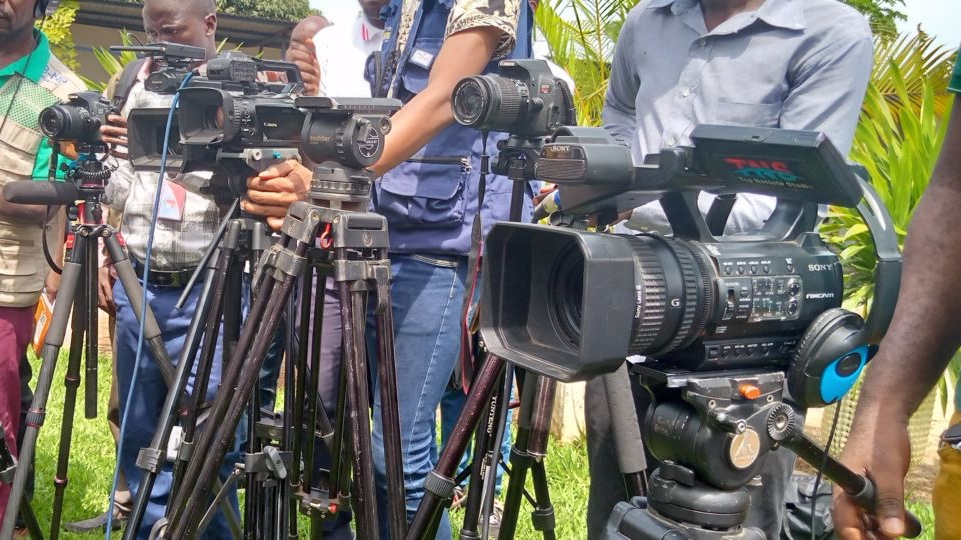
In Burundi, the June 2025 elections are fast approaching amid a tense political climate. Preparations are underway, while the Independent National Electoral Commission (CENI) has been accused by the opposition of bias. Yet political debate remains almost nonexistent. The media—expected to play a crucial role in informing the public and enabling voters to choose future leaders based on their political platforms—have been significantly weakened.
The backdrop to these legislative elections is one of rising tensions, with media outlets showing reluctance in their coverage of all political news. The quality of news reporting has sharply declined since the sociopolitical crisis that began in 2015.
According to observers, most media outlets are gradually turning into mere communication agencies. “Some now serve only as mouthpieces for those in power. Others choose to broadcast low-impact current affairs or focus on entertainment,” laments a young university lecturer, speaking on condition of anonymity, who says he no longer feels inclined to follow news produced by Burundian media.
On the eve of the elections, many media outlets are resorting to self-censorship to avoid repression.
The recent ultimatum issued by the National Communication Council (NCC) to Iwacu, the only newspaper that still dares to cover political issues, to retract a report on the presence of Burundian soldiers in eastern DRC, appears to be a warning addressed to those who resist.
In December 2024, the NCC imposed a Media Code of Conduct for the electoral period. Many view this as a form of pressure exerted on the media to restrict their activities during this sensitive time.
Navigating Criticism and Misunderstanding
“They are media in name only,” says a young man living in a neighborhood of the Gihosha zone in Bujumbura City. He mostly follows the news on social media and adds that “the information broadcast by traditional media is bland and uninteresting.”
Landry, not his real name, believes that most media outlets have bowed to the authorities’ wish for them “to keep their mouths closed on controversial issues”. He remains highly skeptical about the media’s role in preparing and covering the elections. “If you try to follow the media, it’s as if the elections don’t exist at all,” he volunteers.
“The rest of the privately-owned media act as if there are no elections.”
A well-known figure in Burundian politics, the former president of the opposition party Sahwanya Frodebu, Léonce Ndikumana, takes a more analytical approach. In his view, media professionals split into two main groups:
“Public media and private outlets close to those in power broadcast statements from the authorities or from the CENI. When these two players are not talking about the elections, they remain silent.” He adds that “the rest of the private media act as if there are no elections.”
For him, the problem goes beyond the media’s withdrawal. The combined actions of the CENI and the government in preparing the elections have discouraged both the population and political actors. “This explains the silence,” he adds, trying to clarify. Known for his outspoken positions, this long-standing opposition figure warns that the situation poses a serious threat to democracy.
On the Verge of Extinction
Simon Kururu, a former journalist and media expert, paints a bleak picture of the current media landscape. According to him, Burundian media began a downward spiral ten years ago and are still in the doldrums.
With his insider’s understanding of the history of Burundi’s media industry, Kururu asserts that the media will play no role in the ongoing electoral process. “The media will play no role,” he stresses. He points the finger at the government, which he accuses of failing to guarantee journalists the freedom to practice their profession.
“They now go wherever they can get paid.”
Echoing Léonce Ndikumana, Kururu notes that, when they address political issues, some media outlets act merely as mouthpieces and dare go no further.
“They now go wherever they can get paid or simply receive a per diem. And that is very serious,” he says critically.
In his analysis, Simon Kururu does not limit himself to professional issues alone. He also highlights the facts that traditional media are facing extinction and skilled staff is ever harder to come by.
Irony of Fate
However, he does not refrain from criticizing media leaders themselves. In his view, media leaders are afraid to address relevant issues—something that explains the population’s growing disillusionment with the media.
When Evariste Ndayishimiye came to power in 2020, his famous slogan “never without the media” inspired hope among media professionals. Many believed that after five years of being severely affected by the events of 2015, the media landscape would begin to recover. Sadly, the very opposite seems to have befallen the media instead.
Despite the reopening of a few media outlets, freedom of speech remains a goal yet to be achieved. This comes at a high cost to the democratic process, especially during an electoral period in a country where the level of civic education remains very low.
Post-edited translation by Akansha Chartier (M1 student in translation at ULB) under the supervision of Matthew Langsley