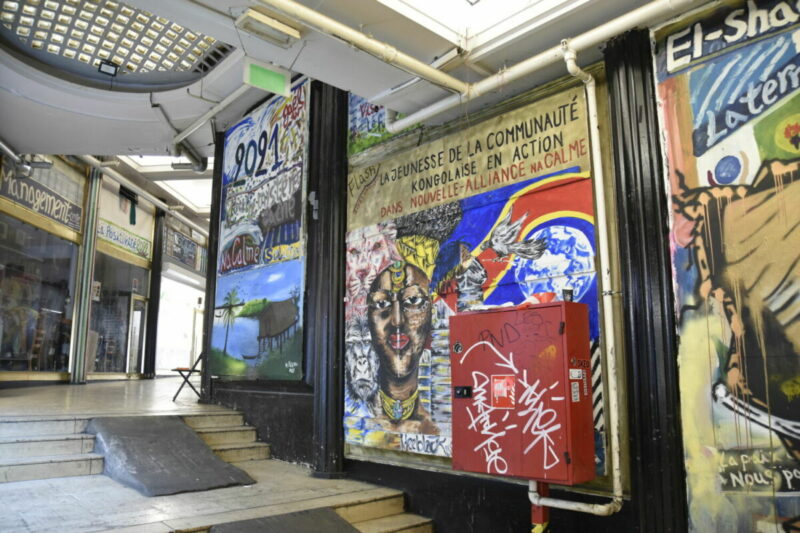
Matonge is a shopping area like no other. First of all, it is multicultural, with a population of African descent. In 2010, there were 16,000 Congolese nationals and 25,000 Congolese-born Belgians living in Belgium. Some wear boubous, others loincloths or simply everyday clothes. They stroll around, talk on the phone, and exchange a few words on the pavement. It’s like the whole neighbourhood is an outdoor café.
[caption id="attachment_3206" align="aligncenter" width="294"] Two hairdressers taking a moment’s break. © Éléonore Talotta.[/caption]The Matonge neighbourhood is a microcosm of Africa. On the narrow pavement of the Chaussée d’Ixelles, pedestrians almost step on each other’s toes and regularly have to dodge grocery stalls that sell goods imported directly from Africa. Plantains and sweet potatoes sit alongside paprika and sugar cane. Inside the galleries, colourful murals face the many hair salons and clothing and jewellery stores. All this hustle and bustle is accompanied by a backdrop of Congolese rumba and a blend of aromas coming from various restaurants offering specialties.
metaslider id=”7551″
Matonge, a shopping area open to all. © Éléonore Talotta and Nowenn Nkanza Masamuna.
A slice of Kinshasa in Belgium
What Congolese person doesn’t know Matonge? Almost none. “Being in Matonge is like being in Kinshasa,” explains Colette Braeckman, former journalist at the Belgian daily Le Soir and Central Africa specialist. “People say that because Congo was colonized by Belgium. So, when Congolese people left their country, the ‘only place’ they went was Belgium. Nowadays, many Africans have moved away, but the neighbourhood remains symbolic.”
“It’s a real African neighbourhood, it feels like home. There are shops selling traditional fabrics, typical food, and hairdressers who call out to you from the street.” Fabiola, Togolese student
Fabiola is Togolese and lives at the Maison Africaine—a low-cost residence for African students—just a few streets away from Matonge. She arrived in Belgium last September to study Protestant theology at the University Faculty of Protestant Theology (FUTP). After a short stay with her family in Tubize, a town in Walloon Brabant, Fabiola chose to move into the Maison Africaine. She says she does not feel out of place, especially thanks to the atmosphere in Matonge, which reminds her of her own country: “It’s a real African neighbourhood, it feels like home. There are shops selling fabrics, typical food, and hairdressers who call out to you from the street. Above all, it’s a very lively neighbourhood, especially in the evening, because people do their shopping late. But I’m not much of a party girl.”
Matonge, between effervescence and decline
Matonge’s reputation extends beyond Belgium’s borders. According to Colette Braeckman, there is a saying that if you haven’t been to Matonge, you haven’t really travelled, even if you’ve been to faraway countries like Canada and the United States.
‘Overall, there’s a great vibe—a real zest for life, even though the neighbourhood is run down.’ Jason, resident of Ixelles
Jason (not his real name) is a Parisian of Martinican descent. He has been living in Ixelles for a year and discovered Matonge thanks to his uncles, who live in Jette (a different Brussels municipality). Since then, he has enjoyed walking around and observing its unique atmosphere: ‘Overall, there’s a nice vibe—a real zest for life, even though the neighbourhood is deteriorating. Some days, Matonge seems almost empty, even in the middle of the week.’ It’s true that the neighbourhood has lost some of its splendour in recent years. As Ms Braeckman laments: ‘The neighbourhood is not well maintained. In my opinion, Belgium should have developed it better. It remains a national neighbourhood, but there are fewer and fewer Africans. I was angry when housing development projects began to spring up. They distorted its character. Before this turning point, the neighbourhood was an intellectual hotbed.’
Memory of the Congolese diaspora
In fact, from the 1960s onwards, the neighbourhood became a hub for the Congolese diaspora. Véronique Clette-Gakuba, a researcher at the ULB’s Institute of Sociology and member of the Présences noires collective, explains that, until that point in time, there were not many Congolese people living in Belgium. It was mainly limited to soldiers during the world wars, or to boys – as the Belgian colonists called them at the time – who came with Belgian families. Things really started to change on 30 June 1960, the date of the independence of the DRC.
As of that September onwards, most of the people arriving in Belgium were scholarship students. They were Congolese, Rwandan or Burundian and often members of the elite in their countries who aspired to help rebuild their countries by returning home once they had completed their higher education in Belgium. The Matonge neighbourhood began to take shape during this period. ‘These students stayed at the Maison Africaine. So, the neighbourhood was initially residential, before shops, bistros and nightclubs frequented and run by Africans opened up,’ recalls Colette Braeckman. Ultimately, many of these students stayed because of political unrest that subsequently broke out in their countries.
Glossary:
Boubou: a large, flowing tunic worn as outerwear in sub-Saharan Africa
Loincloth (also called a wax): a piece of fabric or woven plant material draped around the waist and covering the hips and thighs.
Congolese rumba: a musical genre derived from Cuban rumba that emerged in Congo-Kinshasa and Congo-Brazzaville.
Boy: a young indigenous servant in colonised countries.
Between 1946 and 1974
First Congolese student migrations
30 June 1960
Independence of the DRC
8 February 1961
Founding of the non-profit organisation La Maison Africaine
At a time when violence against women still too often takes the form of silence, GAMS Belgium is taking action. For nearly thirty years, the organisation has fought relentlessly against Female Genital Mutilation
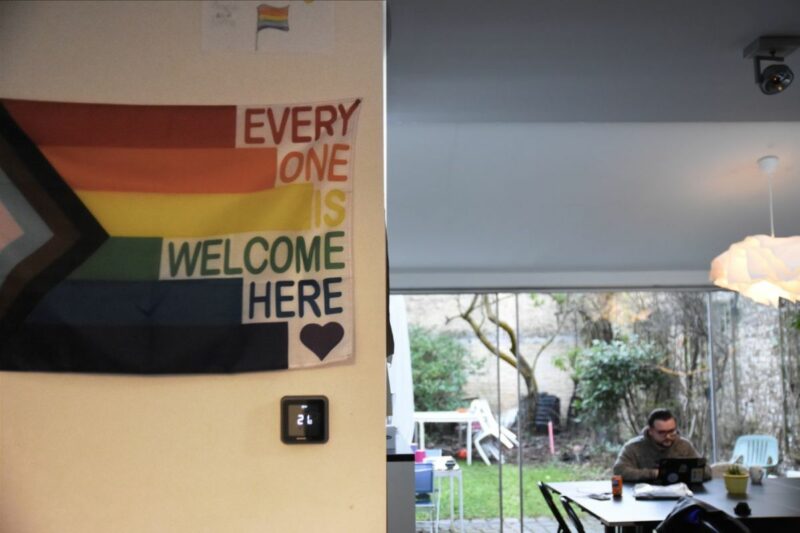
Hana (pseudonym) was 12 when she became aware of her homosexuality. However, she never shared this with her family. Since she was raised by strict and conservative parents, the young […]
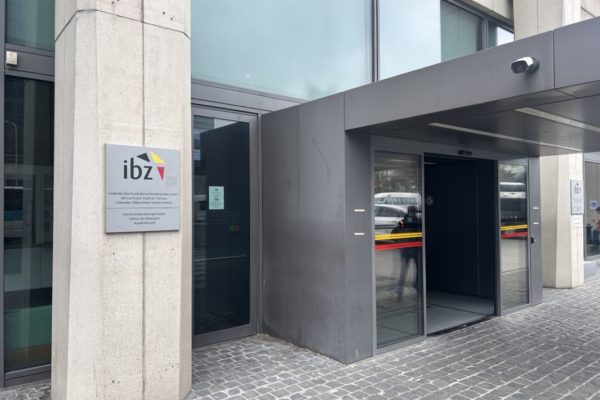
Many asylum seekers, including Mouta, head to the Immigration Office and often leave disappointed.
In OKAN integreren minderjarige nieuwkomers in het Belgische onderwijssysteem. In deze podcast spreken we met coördinatoren, een vervolgschoolcoach en vijf oud-leerlingen over hun ervaringen en de impact van OKAN.
La politique d’intégration en Belgique est en pleine mutation. En Flandre, le processus est payant. En Wallonie, un nouveau décret est en cours d’élaboration. À Bruxelles, obligatoire depuis deux ans, il cherche sa voie.
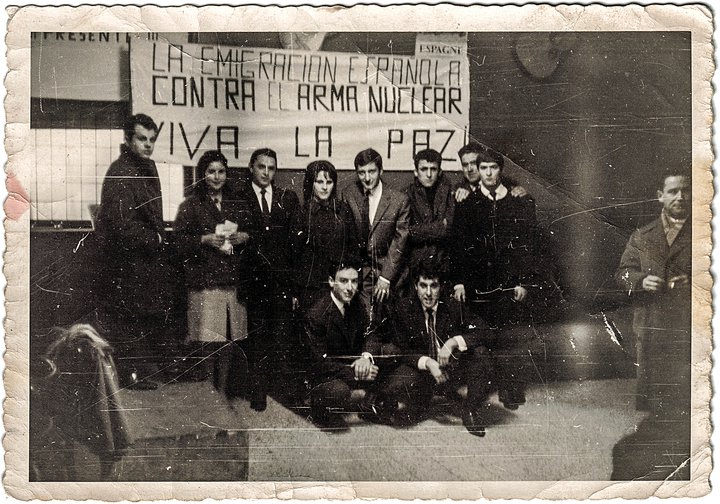
Au milieu des années 70, 70.000 migrants espagnols vivaient en Belgique. Fuyant le franquisme et attirés par le travail dans les mines, ils ont continué la lutte contre le fascisme à distance dans les clubs García Lorca.
C’est un curieux sentiment, et ce n’est pas la première fois. On est là, on crie, on gueule, on vocifère si fort qu’on ne s’entend plus penser. Pourtant, avec un […]
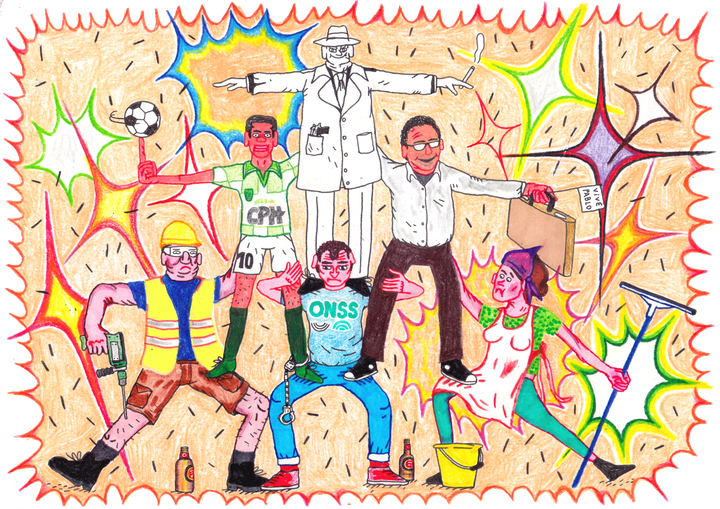
Cet article a été publié par Médor le 10/02/2020. Depuis plus d’un an, la Belgique est en possession d’un listing de 317 sociétés portugaises qui ont ciblé tout particulièrement notre […]
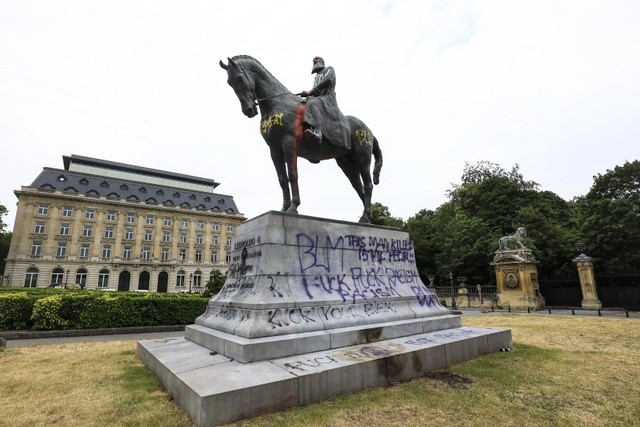
Congo is al sinds 1960 geen Belgische kolonie meer, maar toch heeft de Belgische staat nog nooit officieel haar excuses aangeboden voor het koloniale verleden. In 2020 heeft Koning Filip […]
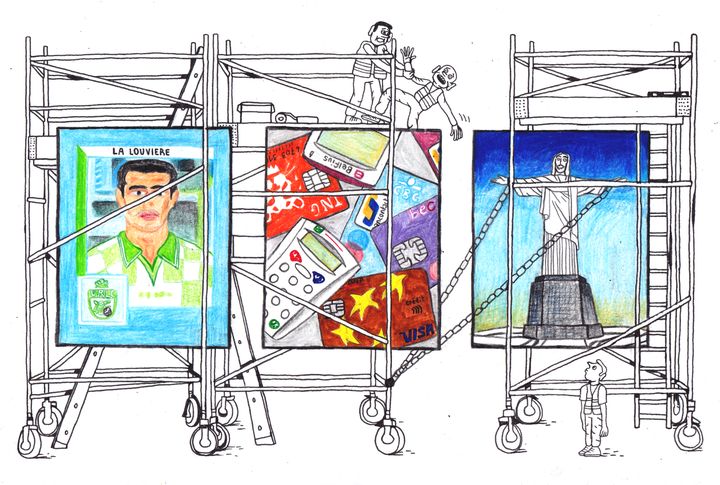
Cet article a été publié par Médor le 03/02/2020, puis mis à jour le 29/05/2020. Quand on évoque le groupe CFE/Ackermans & van Haaren, on atteint les sommets de la […]
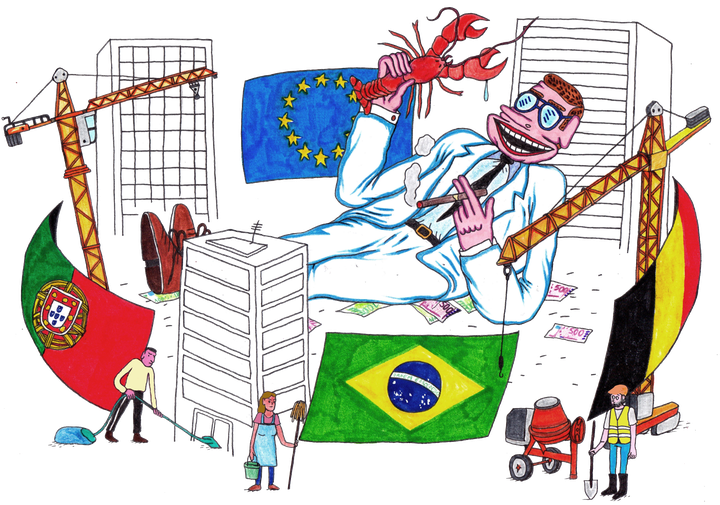
Pour trouver du boulot vite et pas cher, à Bruxelles-Midi, il suffit de s’écarter un peu de la gare, d’éviter les bureaux de l’ONSS (l’organisme fédéral qui est censé contrôler […]
— A collaborative media of exiled journalists, and journalism students from the ULB and the VUB —