
Escaping Female Genital Mutilation: A Mother’s Fight to Save Her Daughter
Journalist and television host Fatimetou Sow Deyna fled Mauritania to protect her daughter from female genital mutation (FGM). After finding refuge in Belgium in 2018, she continues to wage her battle against FGM. This is her story.
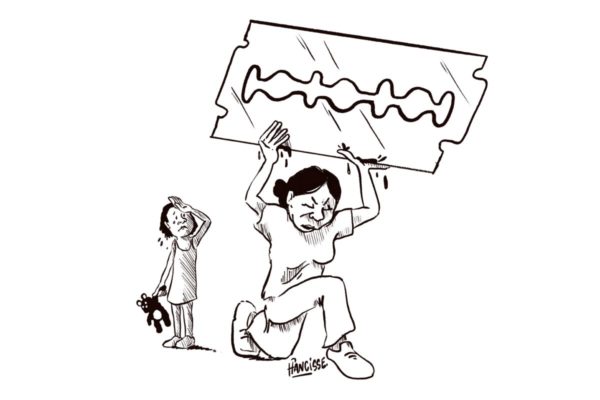
Some battles stay with you for life and can even cost you your own, all to save what you love most. The fight I waged to save my then 9-year-old daughter from FGM is one of those battles. It is a burden I every day, with the determination of a mother ready to do anything for her child. But it is also a story of injustice, an unbearable suffering inflicted on thousands of young girls across the world. A scourge that urgently needs to be fought.
“Female genital mutilation remains a tragic reality for millions of young girls every year.”
I am a journalist, television host and activist advocating for children’s rights. But there is one life experience I rarely share: FGM, this barbaric practice destroying many lives still. It is an ancestral practice that persists to this day, particularly in many African countries. Despite countless awareness campaigns, female genital mutilation remains a tragic reality for millions of young girls every year.
A life choice imposed on girls
It all began when I learned my daughter would become a victim of this ritual, at only 9 years old. She was a little girl full of life, innocence and dreams. But in my culture, a girl must be “ready” to meet her future husband and, for that, needs to undergo female genital mutilation. This act is supposed to “purify” the girl, but actually strips her of her dignity, her integrity and her pleasure. The clitoris, a precious organ, is removed, and with it, a part of a young girl’s identity and autonomy.
“Nothing mattered more than saving my daughter.”
At that moment, I decided to flee the country, knowing it would mean giving up on my family, my homeland, my culture. But nothing mattered more than saving my daughter. I protected her. I took her far from this tragedy that awaited her, far from a blind and cruel tradition. My daughter had to escape that fate. And therefore, we had to run.
Absolute agony
FGM doesn’t just cause excruciating physical pain – it can inflict lifelong psychological trauma. I saw it with my own eyes, young girls dying from agony. Bleeding profusely in a deathly silence or sinking into endless suffering. No words can describe the horrors I have witnessed.
“They are forced to live with this experience for life.”
I witnessed those girls’ suffering, but I also noticed the indifference of the people perpetuating the practice. And that indifference may be the worst crime of all, because FGM is not only a physical mutilation, but also a total deprivation of young girls’ autonomy. Often subjugated to the tradition, these children are reduced to the roles of voiceless, choiceless objects. They are forced to live with this experience for life. As an activist, I have devoted all my energy to condemning the practice, to raising my voice against a patriarchal system that deprives girls of their freedom. But beyond words and actions lingers a dull pain, a fear that has never left me: the fear that my daughter, like so many others, might meet this fate.
My daughter’s testimony
Today, my daughter is 16. She got away from the harmful tradition that would have defined her life. But she has not forgotten. She is now growing up in a liberated environment, thriving and aware of her right to preserve her physical integrety.
“Traditions shouldn’t define who we are.”
More than ever, she, like her mother, is committed to letting the world know that FGM has no place in our day and age. She fights for girls’ and children’s rights, so that no young girl should ever again be deprived of her dignity. She speaks up, advocating for these rights. “Traditions shouldn’t define who we are. We must determine our own destiny”, she often tells me.
A call to action
Although banned in many countries, female genital mutilation still affects millions of girls every year. According to the United Nations (UN), around 200 million women and girls around the world have undergone FGM. The practice results in many health complications, infertility, psychological trauma and in the worst cases, death. It is high time for societies to take action and to put a stop to this plague. We must promote prevention, education and awareness programs. Every voice, every battle matters. And while the war against FGM won’t be won overnight, we all ought to make it a priority, together.
“I fight against this for my daughter, and I know someday, she will continue the fight.”
Today, I am sharing my experience so that elsewhere, mothers won’t have to leave, daughters won’t have to endure what I have. I am speaking out so that everyone knows it is still possible to change things. I fight this battle for my daughter, and I know someday, she will continue it, for a world free from FGM. The tradition has no place in today’s world. It is time to say no, once and for all. I am proud to see my daughter taking up this fight. She is more determined than ever to let the world know that every girl deserves to decide her own destiny. Every little thing I have sacrificed has been for her and her future. And today, I can finally say that it was worth it. My daughter is free. And that is my greatest victory.
Post-edited translation by Mizero Kabeho Christelle (M1 student in translation at ULB) under the supervision of Sonja Janssens