
Iran: controversial Hijab and Chastity law suspended under social pressure
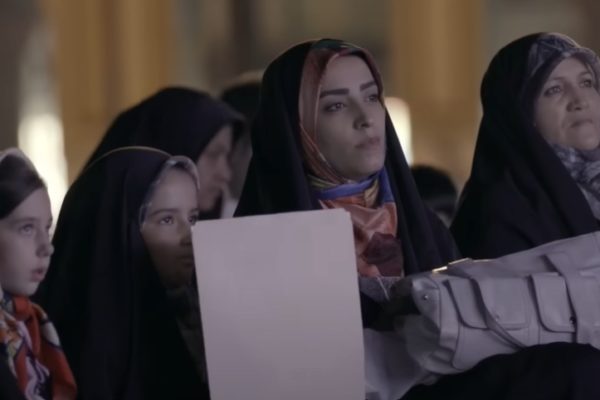
Iran has recently announced the suspension of the new Hijab and Chastity law, a move that highlights the growing tensions within the country. Initially designed to tighten social control, the measure sparked fierce opposition, forcing the Supreme National Security Council to intervene.
This article was originally published by L’Œil de la MDJ on January 22, 2025, the media outlet of the Maison des journalistes (MDJ) in Paris, which hosts and supports exiled journalists from around the world.
A law suspended amid social unrest
On December 14, 2024, the Secretariat of the Supreme National Security Council formally requested that parliament suspend the law’s implementation. Alireza Salimi, a member of the parliament’s presiding board, confirmed this decision, stating, “The Secretariat has sent a letter to the parliament, requesting that the government submit a new bill to address ambiguities in the Hijab and Chastity law”. (IRNA News Agency, December 14, 2024)
Sharam Dabiri, Vice President for Parliamentary Affairs appointed by Iranian President Masoud Pezechkian, also confirmed the request, stating: “We are preparing an amended bill that will be submitted to parliament for further deliberation.” (Mehr News Agency, December 14, 2024)
“The government’s current actions to halt the law set a dangerous precedent.”
Akbar Ranjbarzadeh, another influential member of Parliament (MP), added: “I am aware that the Supreme National Security Council intervened and suspended the implementation process. As the highest authority on national security, they took this decision and we must all abide by it.” (Khabar Online, 14 December 2024)
However, some MPs have expressed their absolute opposition to the suspension. Such is the case of Amir Hossein Bankipour, one of people behind the bill. He stated: “Once the Guardian Council has approved a law, the government has no right to amend or withdraw it. It is only after a law is implemented that amendments can be proposed. The government’s current actions to halt the law set a dangerous precedent that undermines both the rule of law and the authority of parliament.” (Fararu, 15 December 2024)
A repressive law at the heart of social tensions
Adopted in September 2024 after two years of debate, the Hijab and Chastity law imposes harsh punishments: fines of up to 330 million tomans (around US$4,285), prison sentences of up to 15 years, and even the death penalty under the offense of “corruption on earth.” The law also applies to girls as young as nine.
The law in addition encourages citizens, including foreign refugees such as Afghans, to report women who do not comply with the rules. Business owners and taxi drivers also face hefty fines if they do not enforce the rules on their female customers.
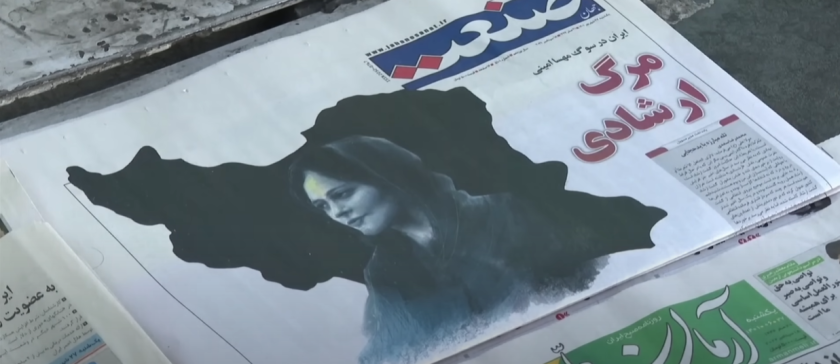
The measures aim to crack down on women refusing to wear the hijab, a gesture that has become a symbol of resistance since the death of Jina Mahsa Amini.
On September 13, 2022, Amini, a 22-year-old Kurdish woman, fell into a coma after being brutally beaten by Iran’s morality police. Her death three days later sparked nationwide protests that rocked the country for six months, killing over 750 protesters and leading to the detention of over 30,000 people. Since then, many Iranian women have defiantly opposed hijab laws, saying they are “stained with blood.”
The role of women according to Ali Khamenei
On December 17, 2024, Iran’s Supreme Leader Ali Khamenei delivered a televised speech to a group of women, without directly addressing the suspension of the law. Instead, he emphasised his views on what he considers to be women’s primary role in society: “The most important role of the woman within a family is procreation and motherhood.”
“Women are the driving force for change in Iran.”
The remarks triggered outrage among Iranian women, who have been at the forefront of the protests.
Maryam Rajavi, the president-elect of the National Council of Resistance of Iran, responded firmly to Khamenei’s comments: “Women are the driving force of change in Iran. From the streets to the prisons to the Resistance Units, they lead the fight for freedom and equality. They will not rest until this sacred goal is achieved.”
As the regime falters, the people find their voice
The suspension of the law comes amid mounting crises within the regime, weakened by geopolitical setbacks in Syria and Lebanon and an ailing economy.
Although temporary, the suspension deals a significant blow to the authorities, who are desperately struggling to contain an increasingly defiant society. Yet this attempt at appeasement appears doomed to fail in the face of a growing opposition, particularly against the policy of compulsory veiling, with the hijab now serving as a powerful symbol of state repression.
Internal divisions, coupled with international pressure, continue to undermine the regime’s grip on power, leaving Iran’s future uncertain and raising the prospect of a potential collapse of the mullah’s regime, reminiscent of the downfall of Bashar al-Assad’s regime.
Post-edited translation by Mathieu Noppe (M1 student in translation at ULB) under the supervision of Sonja Janssens