
Israel-Iran War : “I would say that a death sentence or execution is probably never a fully legitimate judicial outcome” (2/3)
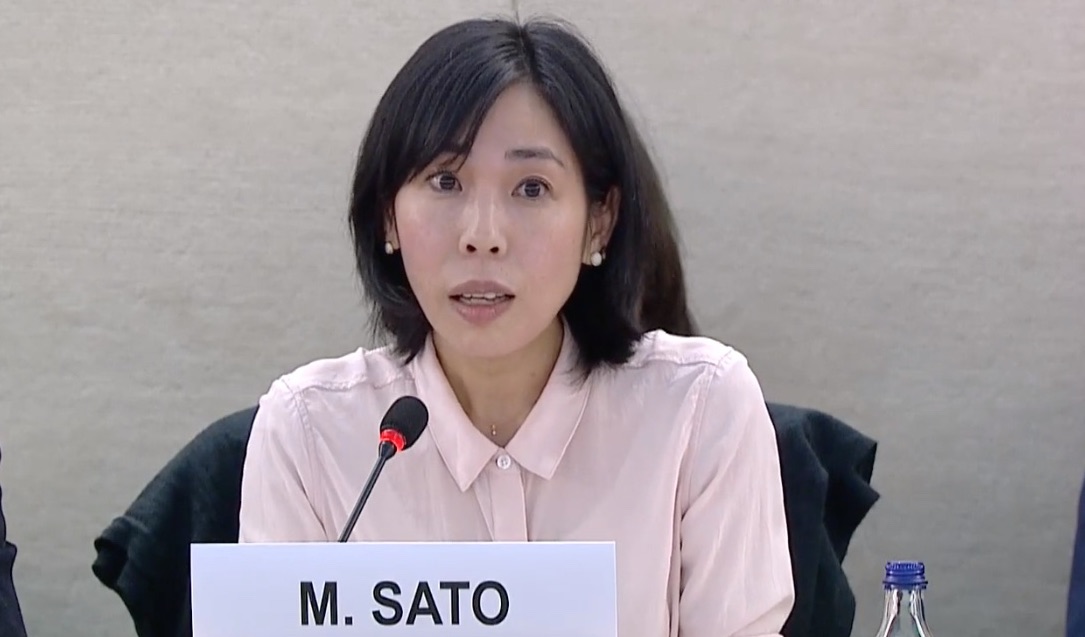
LATITUDES had an exclusive interview with Dr. Mai Sato, UN Special Rapporteur on the situation of human rights in Iran, to examine the state of human rights in the country, in the months following the conflict.
As part of an ongoing series on the Iran-Israel war, LATITUDES had an exclusive interview with Dr. Mai Sato, UN Special Rapporteur on the situation of human rights in Iran, to examine the state of human rights in the country, particularly in the months following the conflict.
In this in-depth conversation, we discuss the challenges facing civil society, political prisoners, and marginalized communities, religious and ethnic minorities, offering a closer look at the evolving landscape of human rights and organized repression in Iran.
In the days following the Iran–Israel war, executions sharply increased. What concrete indicators show this surge is the result of state policy rather than isolated judicial actions?
“Maybe I should start by clarifying that the 1.200 executions are obviously figures collected by civil Society; these are not state figures, it’s between January and October this year. We cannot say after the Israel–Iran military escalation… executions have dramatically increased. The executions had already been rising since last year. Last year, figures were over 1.000, and this year, by October, they had already reached at least 1.200. So, I think it’s inaccurate to say that after the twelve-day war, there was a massive surge in executions.
“So, there’s been a rise in the number of espionage-related executions.”
In January, this was again collected by civil society there were around 80 executions. In March, it was a bit lower, about 60. Then in April, it went up to over 120. In May, nearly 160. During July and August, it went down a bit to around 100. And now we’re seeing around 160 again for the last couple of months. So yes, executions have increased, but I wouldn’t pinpoint the causality solely to the military escalation. But one thing I would see a correlation with is the number of executions for espionage charges. There have been 12 executions between January and October this year for espionage; 10 of those were carried out after the 13th of June. And if you want to compare those figures with previous years, in 2023, we know of six executions for espionage; in 2024, five executions. So, there’s been a rise in the number of espionage-related executions, and a rapid rise after the 13th of June.”
What, in your view, explains the Iranian government’s post-war intensification of espionage accusations, now applied so readily to journalists, activists, and even ordinary citizens?
“I should start by clarifying that espionage was already a capital offense, and as of the first of October, there is a new law on espionage that expands counter espionage. And as you rightly point out, it now includes, for example, giving information to foreign media and so forth. So yes, the concern is that more people could be executed under broadly defined national-security offenses, with the definition of espionage expanding. And I think this is definitely a kind of knock-on effect of the military escalation, because the new law was introduced and passed immediately after the military escalation had started.”
What evidence points to the use of executions as a tool of social control and intimidation, rather than legitimate judicial outcomes?
“That’s a very interesting question. Not just Iran, but in any country that has the death penalty, I would say that a death sentence or execution is probably never a fully legitimate judicial outcome. As you know, under international human rights law, one could argue that it still permits the use of the death penalty in limited circumstances, but I think the UN’s position now is that it should be applied only in a way that does not violate international standards.
“Any country that is currently carrying out executions, including Iran, is doing so primarily for retributive reasons or as a tool of social control.”
I take the view that most executions are probably not legitimate judicially. I believe most executions lack judicial legitimacy. In Iran, of the roughly 1,200 executions recorded so far, about half involved ordinary crimes such as murder, while the rest concerned security-related charges and sexual offenses that clearly violate international human rights standards. These cases are further undermined by a lack of transparency, due process, and fair trials. Moreover, there is no academic consensus that the death penalty is more effective than other punishments, suggesting that executions in Iran, as elsewhere, are primarily used for retribution and social control.
Given your account of the transfer of political prisoners and the dire conditions of women in Qarchak prison, what more can you tell us about the situation in other prisons that receives less media attention?
“You’ve mentioned a few points about the treatment of prisoners. I think the first part of your question was about the transfer of prisoners from Evin to Qarchak and Greater Tehran prisons, particularly for political prisoners. During that time, many of them have since been moved back. What was really revealing to me was that once the women political prisoners were moved to Qarchak prison, we heard news of several women prisoners’ deaths in custody. I rarely hear about death cases in custody in other prisoners, though there are many stories of medical neglect in Evin prison. I think that really highlights how little we know about what happens beyond Evin prison. They also have ways to communicate with those outside the prison and with the wider community, and have access to international media, which I found very telling. This also raises concerns about the treatment in other prisons that we don’t know about.”
What do the coordinated prison protests such as ‘No Execution Tuesdays’ and the recent hunger strike by Reza Khandan and others reveal about the treatment, vulnerability, and communication limits of political prisoners, and about their resilience under tightly controlled conditions?
“You mentioned the protests. I think it’s remarkable that, despite being tightly controlled in detention conditions, protests are happening inside those prisons. You mentioned a couple of recent cases, but I think there has been ongoing coordinated resistance within the prisons, with prisoners resisting moves to solitary confinement cells. I think the campaign “No Execution Tuesdays” has been carried out. Since, I believe, the beginning of 2024, prisoners participating in the “No Execution Tuesdays” campaign have been going on hunger strikes to protest executions. You also mentioned coordinated protests: since October in Qarchak prison, following the death of women prisoners, as well as another coordinated protest involving 1.500 prisoners in Qezel Hesar prison to protest the surge in executions. These protests reveal not only the daily realities inside the prisons but also the remarkable strength and resilience of those prisoners inside an extremely controlled environment.”
Some reports suggest that new restrictive measures have been introduced for prisoners who protest or speak out in Iran. Do you consider these restrictions to be new, and how have such measures been applied historically?
“I wouldn’t call them new restrictions. I think these measures have been used for some time. There is also a regulation, from 2021, that outlines the consequences prisoners may face if they organize a strike, which can include temporary bans on visitation or furlough, transfers to other prisons, and, in some cases, loss of eligibility for pardon. But even before this regulation, those who protested or spoke the truth against the authorities were met with similar consequences. So, I wouldn’t necessarily describe these as new restrictive measures; I think these repercussions and tactics have always existed.”
Based on the reports on Baha’is situations in Iran, how has the nature of repression against the Bahá’í community evolved, especially in the context of recent military escalations?
“You might be referring to a side event that was organized last year for the general
assembly. It was not my report. The report was published by an Australian
University, and I was there as part of the guests to celebrate the launch of the
report.
So maybe I’ll answer that in two parts. I think in my current general assembly
report that I represented last month, I talked about the intensification of repression
against the Bahai’s especially after the military escalations. I think the Baha have
been they sort of the used to escape goats for the linkage with Israel
collaboration, espionage, and so forth, but that also isn’t new.
“There are other forms in which the Bahai community human rights protection is violated.”
I think that was a charge broad against the Bahai’s for many years, but I think that has been intensified. In terms of the findings of the report that was published a year ago what that report talks about is the changing nature of persecutions that in the 80’s for example there were more executions and more recent years what we see that we don’t really hear about the Bahai’s being sentenced to death or executed but there are other forms in which the Bahai community human rights protection is violated.”
Based on the report published last year by the Australian university, what were the key findings?
“The report published last year discusses the changing nature of repression against the Bahá’ís. In the past, it often involved loss of life through the state’s lethal use of violence, but now it has shifted toward more structural and cultural forms of violence, such as limited access to higher education, employment, and so on. The report argued that this marks a change, like repression. On the second point, which relates more to recent repression, yes, you’re right: the Bahá’ís continue to face arbitrary arrests, violent raids on homes, raids on businesses, property confiscations, and increased surveillance. I wouldn’t single out the Bahá’í community compared to other religious and ethnic minorities, but there has definitely been an intensification of repression and surveillance.”
In your assessment, what are the main factors driving the intensified persecution of the Baluch population and the Sunni minority in both Sistan–Baluchistan and Kurdistan?
“Let me start by noting that the Baluchi community is almost entirely Sunni. In the
Kurdish community, I believe more than half are Sunni Muslims, while some are
Shiia Muslims, and others practice indigenous minority religions, along with a
small number of Christians and Jews.
Based on the reports I have received, the arrest and intimidation of religious
leaders and worshippers intensified after the 2022 protests. I believe this is linked
to the fact that the regions of Kurdistan and Sistan Baluchistan were major
centers of mobilization.”
“I would also add that the widespread poverty particularly in Baluchistan significantly limits access to human-rights awareness.”
However, I also want to emphasize that it would be too simplistic to attribute this solely to Sunni identity or religious minority status. Both Kurdistan and Sistan–Baluchistan are not only Sunni-majority regions but also ethnic minority regions, and it is this intersection of identities that contributes to the heightened persecution of these communities. I would also add that the widespread poverty, particularly in Baluchistan, significantly limits access to human-rights awareness and legal representation, which in turn exacerbates the human-rights violations taking place there.”
In your recent report to the Human Rights Council, you highlighted serious concerns regarding women’s discrimination and the lack of legal protection against domestic violence in Iran. Could you explain more about the elements?
“In my March report to the Human Rights Council, I focused on the gendered aspects of human rights in Iran, including femicides, honor-related killings, and cases where women become perpetrators of homicide. I also addressed the absence of criminalization of domestic violence, including marital rape. In June, the government withdrew the long-pending bill to protect the dignity and security of women after legislative changes weakened its core provisions. While a new, more progressive bill could be welcomed, its content remains uncertain.”
How do you assess the current enforcement of Iran’s hijab laws, particularly given reports of uneven implementation between major cities and more remote regions, and the increasing reliance on surveillance and business-based enforcement?
“I think there is a slightly more positive development on the hijab law: I believe the Law Protecting the Family Through the Promotion of Chastity and Hijab has not been enforced, but wearing a hijab remains mandatory. As you are aware, Article 638 of the penal code stipulates that women who appear in public without the prescribed hijab may be punished with imprisonment or a fine. Now, there is a question over the extent to which this is enforced. I am getting mixed reporting. I don’t think there is much enforcement in, for example, Tehran, but I do receive reports of more enforcement in regional and remote areas. I also think the nature of enforcement is perhaps changing with more use of surveillance and more use of monitoring of businesses about the implementation of the hijab.”
What are the most pressing human rights risks for children and juvenile offenders in Iran, particularly those facing execution?
“To understand the risks facing children and juvenile offenders in Iran, it’s important to understand the factors that often lead to offending in the first place. Child marriage, poverty, etc., represents a significant pathway into the criminal justice system, as highlighted in cases like that of Goli Kouhkan. Early marriage can trap children, particularly girls, in cycles of abuse, poverty, and limited opportunities that may subsequently lead to involvement with the law, whether as victims who become criminalized or through circumstances arising from their vulnerable situations.
“International law provides unambiguous guidance on these matters, establishing that children should never face execution and must be afforded special protections.”
For those fortunate enough to secure release, they face the daunting task of restarting their lives whilst carrying the stigma of being an ex-offender, a burden that is particularly heavy for young people who should be beginning their adult lives with opportunities for education, employment, and social integration. International law provides unambiguous guidance on these matters, establishing that children should never face execution and must be afforded special protections that recognize their developmental stage and capacity for rehabilitation.”
If current trends continue, what trajectory do you foresee for human rights in Iran over the next 12 months, and what specific actions should states take now?
“The death penalty will likely continue to be used extensively, whilst civic space will continue shrinking, leaving civil society actors with even fewer opportunities to operate safely and effectively. States could humanitarian visa programs to protect Iranians at immediate risk. Increased funding for civil society organizations operating outside of Iran is essential to maintain documentation efforts and support networks. On transnational repression, states can also take proactive action to protect individuals at risk within their own borders. Police in host countries face significant challenges, as they must first build trust with victims who often distrust law enforcement based on their experiences back home. Police authorities also need specialized training on how to effectively handle reports of transnational repression, recognizing the unique dynamics and fears that characterize these cases.”