
Memories of the Syrian War (4): Hell Behind Bars
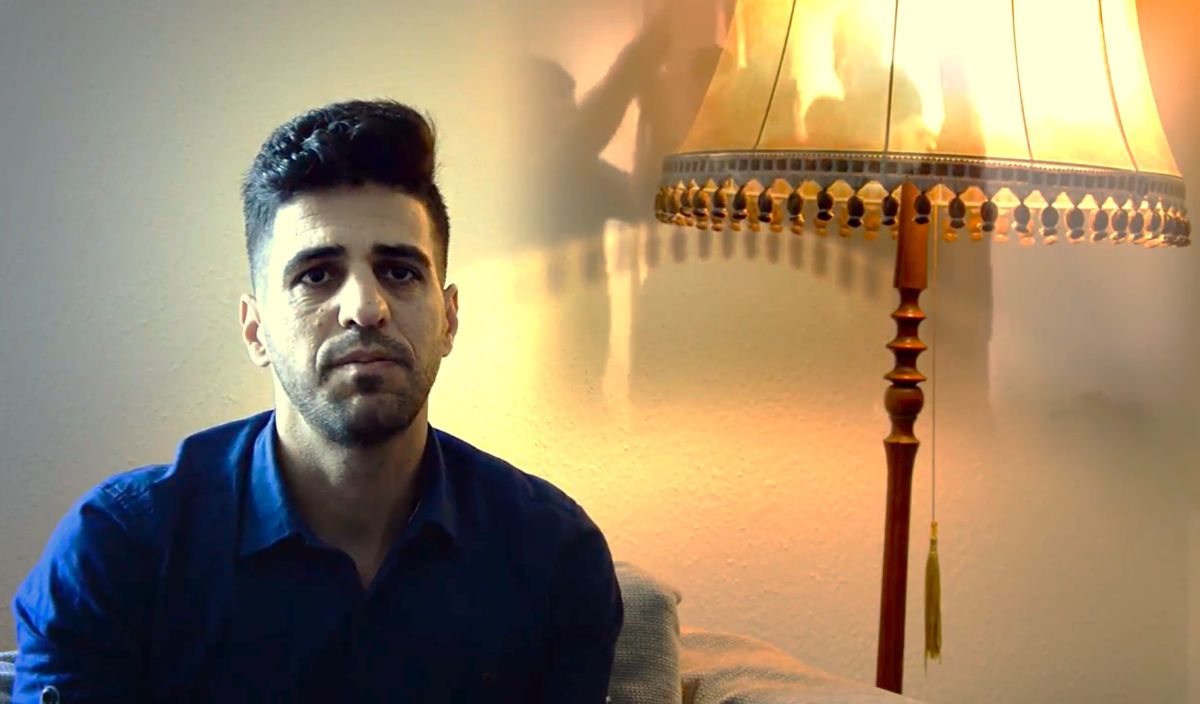
In Syrian prisons, darkness also applies to the absence of humanity itself. Through his testimony, Dr. Amine offers a story like an open wound, a cry that no one can ignore.
In the bowels of Syrian prisons, darkness is not merely the absence of light but of humanity itself. Here, time ceases to exist, replaced by a slow agony where every minute weighs like eternity. The walls ooze fear, the floor absorbs tears, and cries vanish into indifference.
How can you describe the unimaginable? How can words capture the unspeakable, the pain that seeps into one’s very soul? Dr. Amine, a witness to the horror, bears in himself the scars of a world where injustice is law, where death is a daily whisper. Through his testimony, he offers not just a story, but an open wound—a cry that must be heard.
The Jailer, Executioner of Inhumanity
Looking down at the ground, voice trembling, Dr. Amine utters: “We are like fingerprints—unique and unalienable. Every prisoner is an imprint, a story, a pain, a different kind of hope. The prison guard is an executioner. He enforces the rules of an unjust system, embodying all the horror that exists on earth. He is the face of cruelty, stripped of all humanity. Can one imagine an upright man agreeing to serve as the tool of a dictator?”
“A prisoner feels everything more intensely.”
Hands clasped, with a thousand-yard stare, Dr. Amine continues: “When people talk about prisoners, they think of physical torture—but what about psychological torture? How did we, the detainees, feel? We oscillated between despair and hope, courage and fear. Each day plunged us into a spiral of emotions: oppression, injustice, humiliation.”
He takes a deep breath before adding: “A prisoner feels everything more intensely. The slightest taste, the faintest sensation is magnified by pain. Hunger, thirst, and fear become ever-present beings.”
Death, a Silent Companion
With a melancholic voice, Dr. Amine goes on: “One day in our cell, one of us died. None of the guards cared. He was dead, that was all. But to us, he was a brother, a companion in misfortune. We lived together, shared everything. His death was a deep wound.”
His eyes filled with tears as he recalls: “We alerted the guards, but they told us to wait until inspection time. Only that evening did an intelligence officer come in. He was handsomely dressed, adorned with gold jewelry, wearing gloves and a mask for fear of catching some disease. He called out our names, and when he reached the dead man’s name, he asked, ‘Where is the animal?’ We told him he was dead. No reaction. He continued his inspection as if nothing had happened.”
Surviving Oblivion
With a bitter voice, Dr. Amine sighs and resumes: “The entire world was fighting against diseases and epidemics, but the Syrian regime seemed to use them as weapons. The neglect was deliberate: lack of food, medicine, water, hygiene. We were deprived of everything essential to survival. How can you put that in words? How can you describe the indescribable?”
“Like someone who came back from the dead to tell his tale.”
With his throat tightening, he confides: “Every prisoner who gets out carries one dream—to tell what he has seen. Like someone who came back from the dead to tell his tale. But some stories seem impossible. They defy imagination. Who could believe that a human being can be so cruel?”
Innocence Sacrificed
Eyes full of sorrow, Dr. Amine murmurs: “One day, exhausted, I rested my head on a fellow doctor’s leg to try to sleep. Suddenly, his tears fell on my face. I woke up and asked what was wrong. He said, ‘Look behind you.’”
His voice breaks as he goes on: “Behind me stood a child, seven or eight years old, frozen by fear—as if surrounded by ghosts. In prison, we had no mirrors; we couldn’t see what we had become. But through his eyes, I understood. We were terrifying.”
“To make him surrender, they imprisoned his son.”
He draws a painful breath before concluding: “The child came from Daraa. His father was wanted by the security services. To make him surrender, they imprisoned his son. We were devastated by that reality. No one could comfort him or hold him—we were too weak, a thousand times weaker than him. How could a child that young survive the horrors of that prison? I didn’t dare ask his name, for fear of adding to his terror. It is impossible, in one or even several articles, to convey the pain of those who were detained.”
The World’s Complicit Silence
With the collapse of the prison walls on December 8, 2024, the world finally had a glimpse of a truth that many thought was only a distant nightmare. Thousands of detainees emerged into the light after years of darkness, but the shadows that scarred their souls remain—forever etched into their memories and wounds that will never heal. As each door opened, stories of suffering and silent death came to light, revealing the names of the disappeared who will never return, and numbers that testify to the magnitude of the tragedy.
According to human rights organizations, 24,200 detainees were released, while 112,414 others remain missing or imprisoned in oblivion—most likely having perished under torture or from medical neglect. Prison was not merely walls and chains, but a silent cemetery, where souls were torn away without witness or sound. The Syrian Observatory for Human Rights recently documented 786 additional deaths inside those hellish cells, bringing the total number of victims to 63,411—killed not only by the hands of their torturers, but also by the silent complicity of the wider world.
Into the Abyss of Forgetting
These numbers are not mere statistics. They are souls, dreams shattered before they could bloom, names that should have continued to resonate in lives they were denied.
Today, as the regime has fallen, drawing a veil over these crimes without demanding justice would be an outrage as cruel as torture itself. Justice is not a luxury; it is an urgent necessity—to build a new Syria, one that will not betray the memory of its martyrs nor the hopes of those who suffered.
Now that the truth has come to light, one question remains: Will the world remember these victims—or will they once again sink into the abyss of forgetting, as they once did in their cells?
Post-edited translation by Alexandros Papadimas Leite (M1 student in translation at ULB) under the supervision of Matthew Langsley