
Memories of the War in Syria (5): A Journey Through Pain and Exile
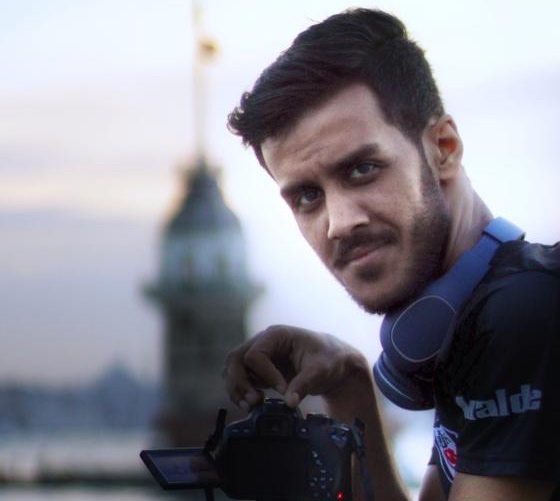
Since the outbreak of the war in Syria in 2011, journalism has warped from being a profession to becoming a perilous undertaking only carried out by souls who refuse to surrender. The story of Mohamed Al-Mudhahi bears witness to this.
When speech becomes a poisoned dagger, when light itself is hunted like an unforgivable enemy, it is only then that stories of suffering are born, and lines are written with tears that dare not dry.
Since the outbreak of the war in Syria in 2011, journalism has warped from being a profession to becoming a perilous undertaking only carried out by souls who refuse to surrender. According to reports by Reporters Without Borders, more than 700 Syrian journalists were killed up untill the fall of the Assad regime, while many others vanished into the darkness of prisons or became anonymous figures in the dungeons of either the regime or the armed opposition. These figures are nothing more than the remnants of stories whose words bled before they could be finished.
When Asylum Becomes a Prison
Mohamed Al-Mudhahi, the journalist who wielded his pen like a flame in the deepest darkness, was among those pursued by the claws of death. After publishing courageous reports exposing the regime’s abuses, he had no choice but to flee to Turkey, believing that safety might still be possible there.
‘A place where I could tell the truth without it resulting in my death.’
Sadly, Turkey proved to be nothing more than a larger cage, where tragedies accumulated beneath the veil of asylum. Since 2019, hostility toward Syrians has continued to rise. The public sphere had become a stage for growing racism, verbal and physical assaults, and political and media repression, rendering them foreigners even in the very places where they sought refuge. According to reports by Amnesty International, more than 60% of Syrian refugees in Turkey have become victims of various forms of discrimination and violence.
‘I was not looking for an easy life,’ Mohamed says, ‘but for a place where I could tell the truth without it resulting in my death.’
The Path of the Dead and the Living
In a moment of despair, Al-Mudhahi decided to throw himself into the arms of the unknown. He crossed the Greek border with pain burning through his body and wounds numbed by the cold. Each day was a test of survival: weeks spent sleeping on sidewalks, breathing in dust, and feeding on a shattered dream.
‘The forest felt like another cell.’
He attempted several times to cross the Balkans, but was arrested twice in Macedonia and seventeen times in Croatia. The journey felt like an endless pursuit. He spent twelve days lost in the dense forests of Croatia, his only comfort the whisper of the wind and the call of death. ‘The forest felt like another cell,’ Mohamed recalls, ‘but this time, one that opened up to all kinds of death.’
The Coma That Brought Him Back to Life
Under a night weighed down by solitude, in the heart of a desolate Croatian forest, shadows danced like wandering ghosts, and silence wrapped the place in a sea of icy terror. Staggering between tangled tree trunks, he was attacked by a swarm of wasps, like wild curses unleashed from the bowels of darkness. The stings rained down like searing blows, mercilessly devouring his body until his breathing faded into a weak gasp, punctuated by painful moans.
Minutes slipped by before the stings slowly tore away his consciousness, drawing him into a darkness as black as a coma, as though the gates of death were gradually opening. There, where no sound existed except the echo of memories, his soul struggled through worlds of torment.
He saw himself chained in the dungeons of the Al-Khatib prison in Damascus, where pain flooded every nerve in his body, where silence became a blade plunging into his chest with every passing second. He saw the faces of the martyrs who had fallen along the paths of truth, those whom death had seized before they could utter their final word. He saw himself running through the alleys of his city, breathing in its scent mixed with gunpowder and tears, before his image faded like a wisp of smoke dissolving into suffocating air.
“I was searching for a freedom that would not be strangled every time I spoke the truth.”
Then a faint voice echoed deep within him, closer to a whisper than to speech. It was the voice of his children, calling to him from afar, like a lighthouse in the midst of a raging sea. That call was like a pulse of life seeping into his tormented soul, awakening within him a final glimmer of hope.
Slowly, he regained consciousness, like someone returning from a long journey back from nothingness. With great difficulty, he stretched out his trembling hand toward his phone and called the Croatian police, who rescued him and took him to the hospital.
Those moments were not merely a reprieve from death, but a rebirth for a man who understood that every step he would take from then on would be a new challenge, and that the life restored to him was nothing less than a chance to continue fighting for the truth.
Crossing the Impossible
Despite the harsh struggle that was his journey, Mohamed Al-Mudhahi never abandoned his dream. After countless attempts that lasted over seven months, he finally managed to reach Europe. But reaching his goal was only the beginning of yet another battle: proving his worth to a society that sees refugees merely as faceless numbers.
‘I was not seeking gold or wealth,’ Mohamed says, his eyes filled with determination, ‘I was seeking a dignity worthy of my exhausted soul, and a freedom that would not be strangled every time I spoke the truth.’
The Word That Never Dies
The story of Mohamed Al-Mudhahi is not merely an escape from death, but a testimony to a will that defies death in the name of truth.
According to reports from the Committee to Protect Journalists (CPJ), more than 100 Syrian journalists remain victims of enforced disappearance, while over 800 have fled their country since the beginning of the war.
Despite all obstacles, truth—no matter how much one tries to bury it—will always continue to seek the light.