
Shirin Ebadi : “Iran is like a volcanic mountain”, on the verge of erupting again
In this exclusive interview, Shirin Ebadi, the 2003 Nobel Peace Prize laureate and one of Iran’s most prominent human rights defenders, discusses her years in exile, the suppression of the ‘Woman, Life, Freedom’ movement, and the growing belief that major political change in Iran is inevitable.
Shirin Ebadi, the 2003 Nobel Peace Prize laureate and one of Iran’s most prominent human rights defenders, says the Islamic Republic has reached an unprecedented level of repression and public anger. Reflecting on decades of activism, exile, and political struggle, Ebadi argues that the Iranian people are living in what she calls an “unequal war without a ceasefire” against their own government.
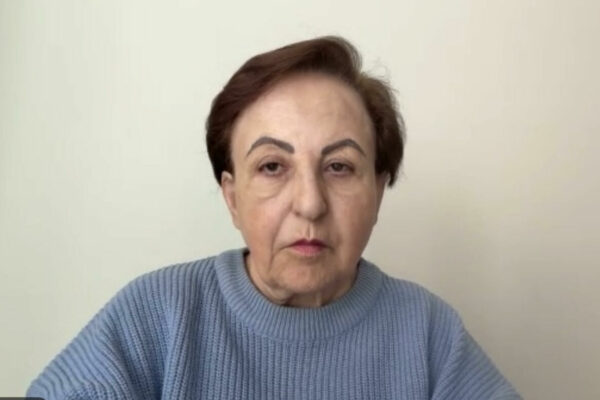
In this exclusive interview, Shirin Ebadi discusses her years in exile, the suppression of the ‘Woman, Life, Freedom’ movement, discrimination against ethnic and religious minorities, Iran’s economic collapse, and the growing belief that major political change in Iran is inevitable.
More than two decades have passed since Shirin Ebadi received the Nobel Peace Prize, becoming the first Iranian and first Muslim woman to win the award. Looking back on those years, the recognition brought not only global visibility but also intensified persecution from the Iranian government.
“My phones were monitored, threats became routine, and the security pressure intensified every year.”
Ebadi explains that much of her experience is documented in her memoir “Until We Are Free: My Fight for Human Rights in Iran“, but she summarises the period as one of escalating repression. “After receiving the Nobel Prize, the pressure against me increased constantly. They attacked my office and my home several times. My phones were monitored, threats became routine, and the security pressure intensified every year.”
According her, conditions became unbearable during the 2009 Green Movement protests. Security forces shut down the Defenders of Human Rights Centre, confiscated its property, and froze her bank accounts. She says most of her Nobel Prize money, around $1.2 million, had been invested in building and equipping the centre so it could operate independently. “The Islamic Republic confiscated everything, including the office property.”
“The greatest pain is to be punished for serving your own people.”
At the time, Shirin Ebadi was travelling in Spain. Her husband and brother warned her that returning to Iran could lead to imprisonment. “I thought I would stay away only a few days,” she recalls. “But those few days turned into years of exile.” Since 2009, she has been unable to return to Iran : “The greatest pain is to be punished for serving your own people.”
Continuing the fight abroad
The Nobel Peace Prize describes exile as emotionally devastating. “Exile separates you from your homeland, your language, your memories, and your loved ones. But I decided I would not remain silent.”
From abroad, she continued her activism through books, lectures, interviews, and online campaigns. She sees herself as a voice for Iranians who cannot speak freely inside the country. “I consider myself the loudspeaker of the people of Iran,” she explains.
Over the years, Ebadi has spoken at universities and international forums around the world, including a recent appearance at the University of Michigan. Her goal is to ensure that the international community does not ignore the conditions faced by ordinary Iranians. “The democratic world must hear the voice of the Iranian people demanding justice,” she insists. “People in Iran are crushed under political and economic pressure.”
Systematic discrimination
Shirin Ebadi has long defended the rights of Iran’s ethnic and religious minorities, including Kurds, Baluchis, Arabs, Azerbaijanis, Armenians, and Baha’is. She argues that these communities have suffered decades of systematic discrimination.
“In Iran, even basic human rights are denied to many ethnic groups”. As an example, she points to the case of Mahsa Amini, whose Kurdish name was originally ‘Jina’. According to Ebadi, authorities refused to officially register the Kurdish name. “This is oppression. No government should deny people the right to their mother tongue or identity.”
The human rights defender also criticises the education system, where Persian remains the dominant language despite Iran’s ethnic diversity. “In schools, education is only in Persian, even though Iran is a multilingual country,” she explains. To promote inclusion, Ebadi says she publishes her works and statements in multiple languages, including Persian, Kurdish, Turkish, Arabic, and Laki. She also points out that members of her foundation helped Iranians gain access to uncensored internet services and sent Starlink devices into the country : “Iran belongs to all its people, not just one ethnic group or one language.”
“It was the cry of a generation that could no longer tolerate humiliation, poverty, repression, and corruption.”
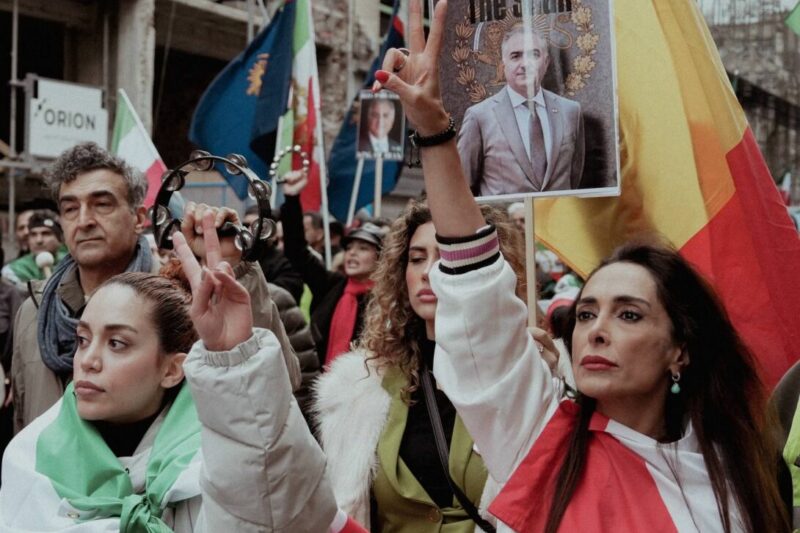
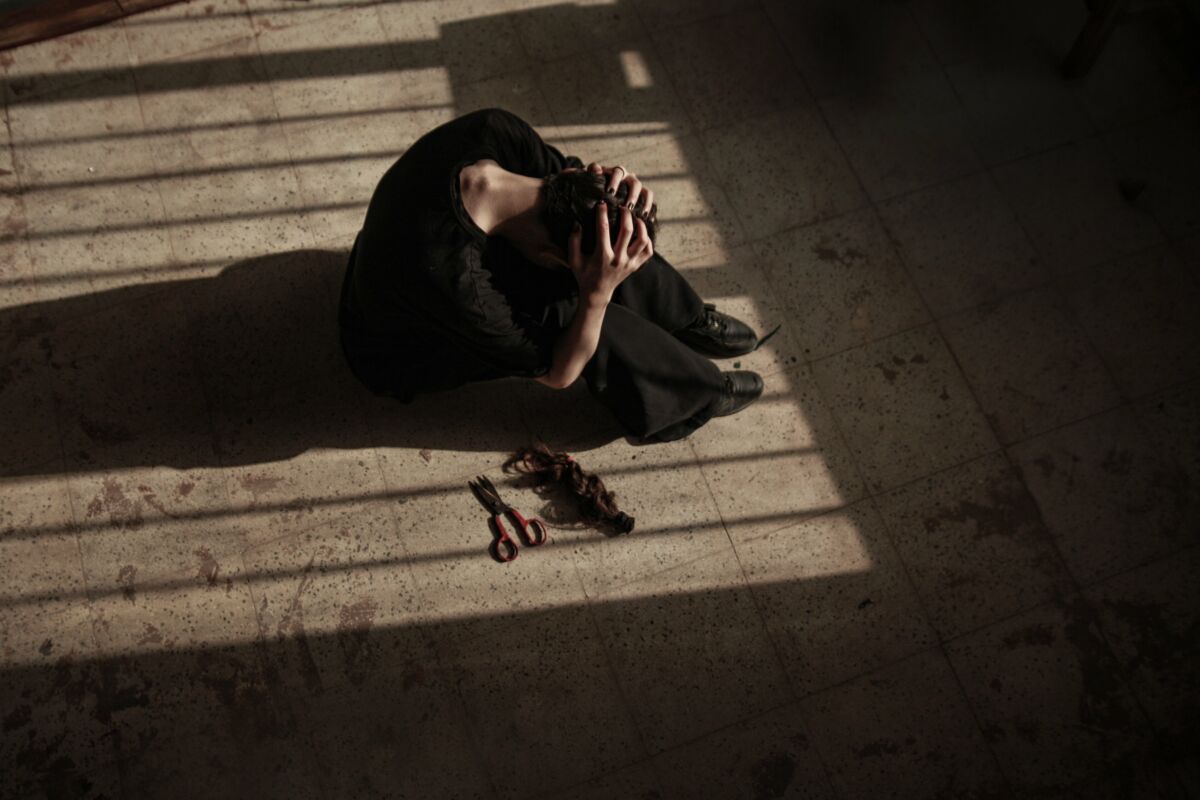
Asked about the protests that erupted after the death of Mahsa Amini in police custody, Shirin Ebadi describes the ‘Woman, Life, Freedom’ movement as one of the most important moments in modern Iranian history : “This movement was not only about the compulsory hijab, but it was the cry of a generation that could no longer tolerate humiliation, poverty, repression, and corruption.”
According to her, millions of Iranians felt they had lost not only political freedom, but also dignity, hope, and economic security. The government responded with extreme violence : “Thousands were killed or injured, and tens of thousands were arrested, even children and teenagers were targeted.”
Despite the crackdown, Ebadi believes the movement demonstrated an unprecedented level of unity among Iran’s ethnic groups and social classes. “People came together beyond ethnic and linguistic differences and showed the rulers of the Islamic Republic that they were united,” she argues.
“Our enemy is right here; they lie when they say it’s America.”
The Nobel Prize then makes one of her most controversial claims: that during the suppression of protests, the Iranian government killed far more people internally than were killed during the military conflict involving Israel and the United States.
“When the ‘Woman, Life, Freedom’ movement began, more than 30.000 people were killed in two days under orders from the Supreme Leader,” she declares. She contrasts that figure with the approximately 5.000 deaths she says occurred during the combined 50 days of attacks involving Israel and the United States. “That is why people chant in the streets: ‘Our enemy is right here; they lie when they say it’s America.”
The source of the casualty claims
Asked how such figures were gathered, Ebadi says information came from multiple informal networks inside Iran. She explains that teachers’ associations tracked students who disappeared from schools during the unrest. “ In only two days, 230 high school students were killed. Around 100 working children who did not attend school were also among the victims.” Additional data came from hospitals, morgues, local contacts, and independent investigations.
According to her, around 20.000 people were arrested during the protests, and many remain missing or face execution. “The government always tries to blame foreign enemies, but people see that the greatest violence comes from within.”
She argues that Iranians have effectively been living in a continuous state of internal repression. “In a foreign war, the enemy is clear. But in Iran, people are suppressed by the government that is supposed to protect them.”
At the same time, she rejects the idea of broad military conflict against Iran. Instead, she supports targeted international pressure against senior officials responsible for repression : “War only brings destruction and misery; the people of Iran do not want their infrastructure or country destroyed.”
“America and Israel cannot determine Iran’s future. Iran has millions of educated young people who will decide for themselves.”
Ebadi strongly rejects the idea that foreign powers should determine Iran’s future : “No country has the right to choose a government for the Iranian people”. While she acknowledges the role of international pressure, she insists lasting political change can only emerge from inside Iranian society : “Iran is like a volcanic mountain. Public dissatisfaction has reached its peak.”
She believes another nationwide uprising is inevitable and predicts the current system will eventually collapse : “This government must fall through the will of the people. America and Israel cannot determine Iran’s future. Iran has millions of educated young people who will decide for themselves.”
Although she cannot predict the exact timeline, she expresses certainty that the Islamic Republic “has no future,” adding, “I am one hundred percent optimistic that this government will soon be gone.”
According to her, the increasing size of protests both inside Iran and among the diaspora abroad reflects the growing depth of dissatisfaction : “Every time people come to the streets, their numbers increase”.
Absence of unified leadership
Shirin Ebadi acknowledges that the Iranian opposition remains fragmented : “Some support the monarchy, some support republican movements, and others support different political groups.” She is particularly critical of republican opposition groups for failing to unite around a clear leadership structure after decades of opposing the Islamic Republic : “For forty-seven years, they have said they oppose the regime, but they still have not agreed on one representative or leadership group. This is a major weakness.”
However, she also argues that the most significant protests in Iran have emerged spontaneously rather than through centralised leadership : “People inside Iran are not waiting for opposition groups abroad to make decisions.” She believes worsening economic conditions could ultimately trigger another wave of unrest : “When people’s tables become empty, they rise up.”
“People can no longer tolerate this level of poverty, violence, and hopelessness.”
Ebadi describes Iran as a country rich in resources but devastated by corruption and mismanagement : “Iran has enormous oil and gas reserves and tremendous human potential. But corruption has destroyed the country.”
She notes the dramatic collapse of Iran’s currency and rising poverty since the establishment of the Islamic Republic : “When the regime came to power, one dollar was worth around seven tomans. Today, the national currency has collapsed.” Ebadi points to frequent electricity and water shortages as symbols of governmental failure : “After nearly five decades, some areas still do not have electricity twenty-four hours a day. Water shortages and environmental destruction have become unbearable.”
According to her, many young Iranians now see emigration as their only option : “People can no longer tolerate this level of poverty, violence, and hopelessness”.
Hope for Iran’s future
Despite years of exile and political struggle, Shirin Ebadi remains optimistic. “No repression lasts forever.” She believes Iran’s younger generation will ultimately build a democratic future based on freedom, justice, and human dignity. “The people of Iran have paid a very heavy price for freedom. But history has shown that authoritarian governments cannot survive forever against widespread public dissatisfaction.”
For The Nobel Prize, the future of Iran belongs not to foreign powers or political elites abroad, but to ordinary Iranians themselves. “I believe in the people of Iran. The day will come when our country is once again free, prosperous, and democratic.”