

“The Virgin and Child”, an award-winning Belgian film about the life of a Yazidi woman
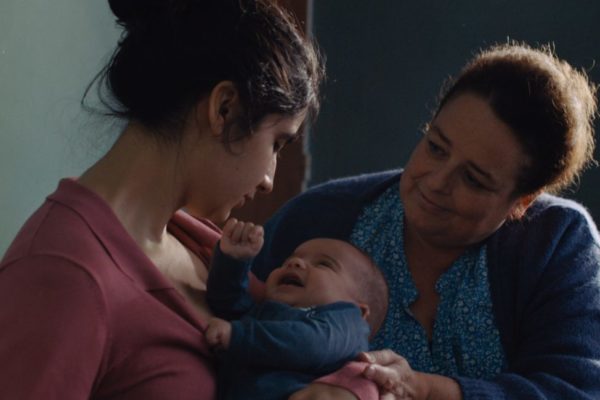
The first feature film by Kurdish director Berivan Binevsa sheds light on the life of Avesta, a young Yazidi woman who became pregnant as a result of rape committed by a member of the Islamic State group. An interview.
The subject of Kurdish director Berivan Binevsa’s first feature film, The Virgin and Child, is quite unsettling. It tells the story of Avesta, a young Yazidi woman who gets pregnant after being raped by a member of the so-called Islamic State group.
Set in Belgium, the film also brings to the big screen themes of motherhood and innocence in the midst of war.
Berivan Binevsa spoke to us about her film, which won awards at the Mediterranean Film Festival of Montpellier and the Duhok International Film Festival (Iraq).
Why did you choose the title The Virgin and Child?
“The title is inspired by representations of the Virgin Mary throughout art history, particularly in painting. However, for me, it is not merely a religious or artistic reference. It is a powerful symbol that evokes universal experiences such as motherhood, innocence, and pain — one that is deeply rooted in humanity’s shared memory.
‘The child is not only someone to be protected but also a witness.’
That is exactly what I wanted to convey through Avesta’s story in the film: in the midst of war, she takes on the responsibility of protecting a child’s life. The child is not just someone in need of protection but is also a witness, a reminder of the past and a glimmer of hope for the future.
The film is not just an individual story; it is a narrative embedded in a historical and political context that speaks to collective memory. Responsibility for the rise of the Islamic State and the persecution of the Yazidis lies not only with the Middle East but also with Europe. As a result, while the film seeks to create an emotional connection, it also raises unavoidable questions.”
How did the narrative of the film come about, and how did you prepare the screenplay?
“Writing the screenplay was a process that required both rigor and a strong sense of responsibility. I was aware of the seriousness involved in addressing the Yazidi genocide through fiction, which is why we carried out extensive research to make Avesta’s story as realistic as possible. We examined legal aspects, psychological impact, interviewed experts, read testimonies from women survivors, and reflected on how justice might be achieved and what the process of reconstruction truly means.
But our inspiration did not come solely from documents. I met a group of Yazidi women in Germany, and their courage, solidarity, and experiences permeated every line of the screenplay. Because it’s not just about conveying historical facts, it’s also about capturing the individual and emotional dimension of the film.
Rape as a weapon
I conducted interviews in Yazidi refugee camps along the Turkish–Syrian border, as well as in Germany, where the largest Yazidi community in Western Europe is located. I also spoke with lawyers and psychiatrists to better understand how the Islamic State’s slave markets operated and how rape was used as a weapon.
But the real spark that turned the idea of the film into a fully formed story came from a completely different place. My sister works in a hospital in Brussels. One day, a Syrian Kurdish woman who had just given birth was horrified by the name given to a baby by a Belgian Muslim mother of Moroccan origin who was sharing her hospital room. The baby’s name was Abu Bakr, the same as that of the leader of the Islamic State group. The woman demanded to be moved to another room.
That scene deeply shook me. It showed how the trauma of war can resurface even in the most vulnerable moments. It made me realize that I needed to portray not only the suffering of the Yazidis in this film, but also how that suffering resonates throughout Europe.”
There is a great deal of emotion in this film. What is it really about — revenge, the pursuit of justice, or the innocence of the young woman who gave birth and of the child she brought into the world?
“The film explores several fundamental emotions: the pursuit of justice, the weight of trauma and the complexity of maternal bonds.
Avesta’s story is not merely one of revenge. She wants the crimes to be acknowledged and not forgotten. When she screamed ‘I am not crazy’, in a Belgian courtroom, she was in fact resisting, rebelling against indifference and oblivion.
‘These stories, so often forgotten or ignored, must be brought to light.’
The film also approaches motherhood from a painful perspective. The child Avesta carries was conceived through rape. He or she is both the most tangible reminder of her trauma and an innocent being she cannot ignore. This dilemma shows that war does not take place solely on the front lines, but leaves far deeper and more lasting scars.
Who will defend these women? Who will ensure justice for them? Will they ever see genuine accountability in national or international courts? These stories, so often forgotten or ignored, must be brought to light. That is what The Virgin and Child seeks to do: to create space for silenced voices and to remember those who have been forgotten.”
Avesta is silent for most of the film. What is the reason behind this silence?
“Avesta’s silence is the result of the profound trauma she has endured and a sign of her alienation from the world. This kind of silence is often observed in people who have experienced severe trauma. But as the film progresses, that silence begins to dissolve thanks to the support she receives from other women. The mandatory therapy also plays an important role in this transformation.
This silence can also be understood as a form of protest, as Avesta refuses the world imposed upon her. Above all, however, she finds her voice through the power of female solidarity.”
While watching the film, I often wondered what Avesta would do with the child. Why did you choose this ending?
“The fact that Avesta leaves her child in Belgium and is seen to return at the end of the film reflects her inner journey. Avesta does not come to Belgium to build a better life or secure a future. Her primary goal is to seek justice. Asylum is of course a possibility, but she knows it will not bring her true peace.
At first, Avesta is driven by revenge. Over time, however, she moves toward a deeper and more meaningful pursuit of justice. She tries to have the perpetrator judged in Belgium, but when the legal system falls short, she realizes that nothing is holding her there.
‘She chooses to stand with her people rather than pursue individual salvation.’
Ultimately, she chooses to stand with her people rather than seek individual salvation. She believes she will be more useful there, in her own country, standing in solidarity with survivors like herself and working toward genuine accountability.
As for the child … for Avesta, this child is not just a baby but a tangible reminder of trauma, war and violence. Accepting the child is not only a personal ordeal, it also means acknowledging the immense tragedy suffered by her people. And Avesta is not ready for that.
That is why she relinquishes responsibility for the child, entrusting it to the state. This child is not only Avesta’s legacy but also belongs to society as a whole, symbolizing a new generation born with the scars of war.
“While migration offers the hope of a new life, it also carries the risk of losing one’s identity and being assimilated.”
From the very beginning, the final scene was one of the episodes that stood out most in my mind. Avesta’s return and the child as a symbol of trauma became one of the most important themes of the film. Avesta’s abandonment of the child is not a “deliverance,” but rather a realization of a larger problem facing her community.
What is the solution for the Yazidis? Should they seek refuge or continue the struggle to defend their existence, their culture and history? Seeking asylum in Europe may be a solution, but will it cause them to lose their identity and disappear over time? While migration offers hope for a new life, it also carries the risk of losing identity and being assimilated. Where then lies true salvation?
Post-edited translation by Stephanie Pierangeli (M1 student in translation at ULB) under the supervision of Sonja Janssens