
Le Refuge in Brussels: a shelter for LGBTQIA+ youth rejected by their families
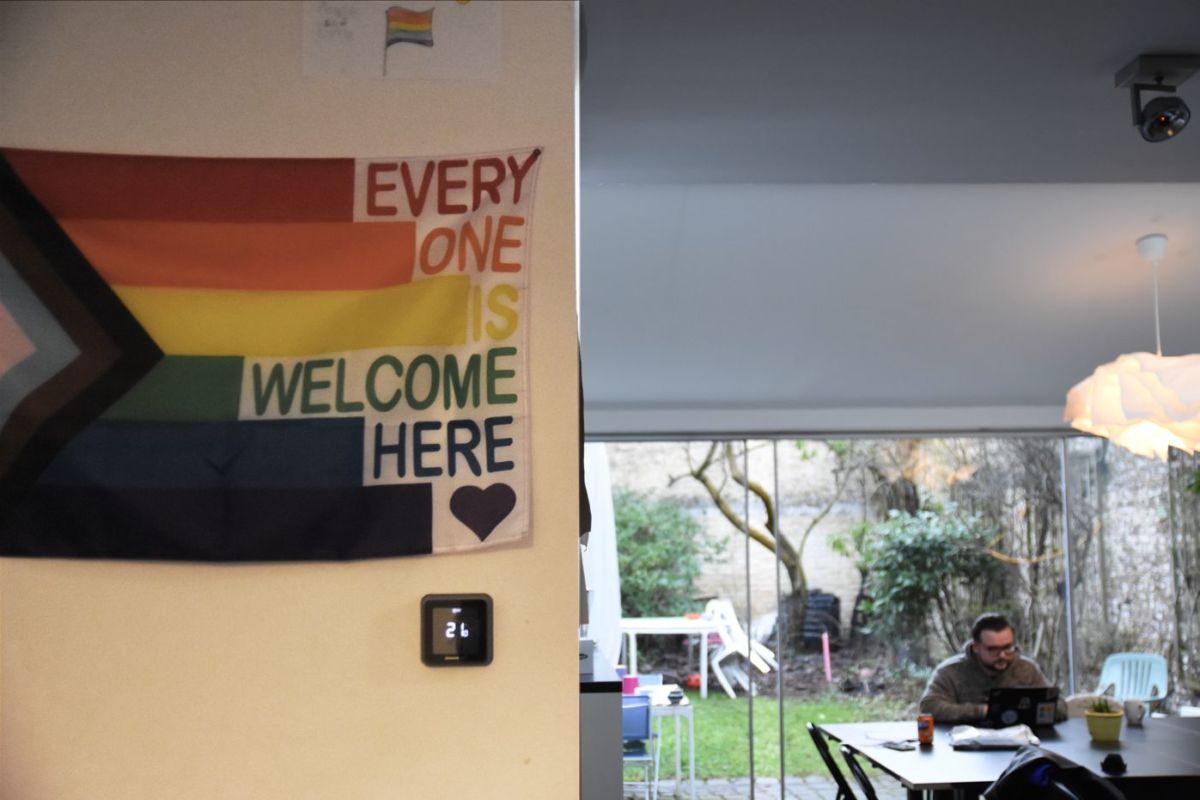
Belgium is often considered a role model when it comes to LGBTQIA+ rights. Even though laws are changing, mindsets, however, are not always keeping pace. In some families, homosexuality or transgender identity are still considered crimes. For some, the only option then is to leave their home, with the risk of falling into poverty. In Brussels, Le Refuge welcomes these vulnerable young people.
Hana (pseudonym) was 12 when she became aware of her homosexuality. However, she never shared this with her family. Since she was raised by strict and conservative parents, the young girl dreaded their reaction.
Her mental health deteriorated. The idea of leaving crossed her mind, but Hana was quickly brought back to reality: ‘I was 18, so I was legally allowed to leave, but what type of life would I have had? I had no money, no income. There was a high chance I would have ended up homeless,’ she explains.
While searching for a solution through the associative community, the young girl learns about the existence of emergency accommodation for LGBTQIA+ people. In 2024, Hana eventually took the leap: she left her home in hopes of finally being able to live her life fully.
Although Belgium, with its progressive laws, is often considered a welcoming place for the LGBTQIA+ community, it sometimes remains a place of exclusion for some of its own citizens. Hana’s story reflects that of other families: teenagers rejected because of their identity, victims of violence, threatened with forced marriage, etc. They must sometimes flee from their homes for their own safety.
At the LGBTQIA+ shelter ‘Opvanghuis’* in Brussels, these people have received support since 2018. ‘They come from across the country, have different cultures, different religions… We welcome as many girls as boys’, explains Corentin Peyraud, one of the shelter’s five psychosocial coordinators. Marc Van den Bossche, communication and awareness officer, explains that the organisation ‘generally exclusively takes in young people ranging from 18 to 25 years old, whose paperwork is in order.’
The shelter also runs another facility, called “Le CADAL”, specifically for LGBTQIA+ asylum seekers.
‘We try to guide them towards complete independence by providing administrative, legal and social support.’
The organisation offers multiple emergency housing facilities for young people in precarious situations. Hana stayed at Maison Alan Turing for several months. The address is anonymous to ensure the residents’ safety. The building, which was renovated in 2024, can accommodate up to 14 people on four floors. It’s similar to a large shared flat. ‘The goal is really to be a place where they can all bounce back and regain autonomy’, explains Marc Van de Bossche. ‘Firstly, we offer them a safe place where they can regain some control over their environment and their lives. Then, little by little, with the help of the psychosocial team, we try to guide them towards total independence, offering them administrative, legal and social support,’ he adds.
While similar facilities exist in Charleroi and Liège, no shelters are currently available in Flanders.
Young people stay on average between 3 and 10 months at the shelter.
A community at risk
It is true that without places like this, young people deprived of material and financial support would be at high risk of falling into precarious situations. But they mainly arrive at the shelter in a state of psychological distress. ‘It’s very hard for these individuals because they lose all their bearings. They also feel conflicted about how they may feel about their parents – since they still share family bonds – and how they feel about themselves’, says Corentin Peyraud, the shelter’s psycho-social coordinator.
Hana suffered particularly from this inner conflict: since she was diagnosed with severe depression at 15 years old, she had to be hospitalised multiple times after suicide attempts.
‘Sometimes it feels like things are evolving, but when working here, we notice that mindsets don’t evolve at the same pace.’
Already vulnerable, these young people’s distress is amplified by the queerphobic discrimination and violence they go through outside the family circle. Cyberbullying, harassment…The shelter has seen it all: ‘Sometimes it feels like things are evolving, but through our work here, we notice that mindsets don’t evolve at the same pace,’ he observes.
According to the figures presented by Unia, it’s actually the opposite: in 2023, the former Centre for Equal Opportunities and Opposition to Racism closed a record number of hate crime cases related to sexual orientation.
Towards a greater peace of mind
The rules at the shelter are simple: listen and give advice, without judgement. Marc Van den Bossche explains: ‘We don’t provide treatment here, but we do assist them in making appointments with a therapist or a psychiatrist.’ Psychosocial counsellors and volunteers also organise dinners and activities. ‘We try to keep their minds busy. It’s not a solution, but it’s a first step toward peace of mind,’ says Corentin Peyraud.
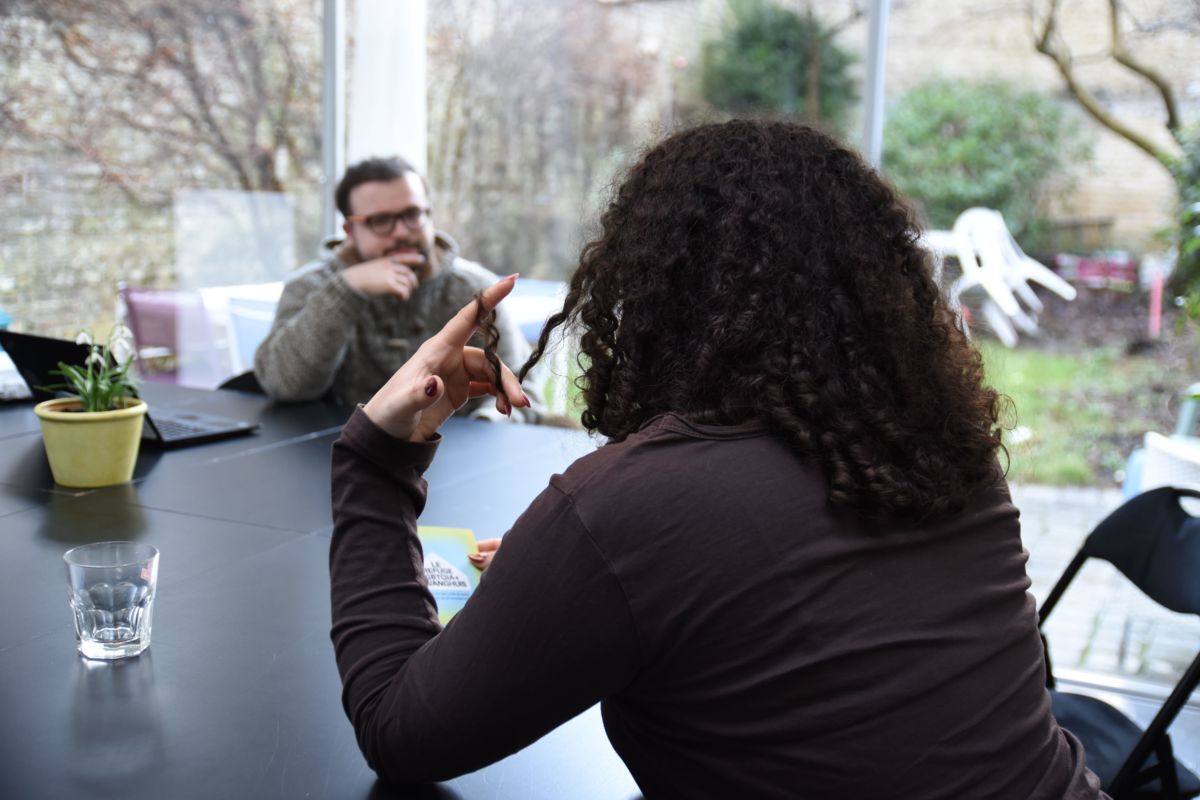
Even though Hana’s departure from home was complicated, her parents did not try to make her come back. © Louise Pinchart
‘We have to be trained on a whole range of subjects’
Marc Van den Bossche admits: ‘Not many people understand the use for this kind of place, or they don’t understand why it’s strictly intended for young LGBTQIA+ people.’ Le Refuge considers it necessary due to the unique needs of these young LGBTQIA+ individuals.
Providing help requires counsellors to be trained in a variety of areas that other shelters typically cannot focus on. It is, for example, very important not to misgender them, to properly support those who are transitioning and to have knowledge about STIs (editor’s note: sexually transmitted infections),’ explains Corentin Peyraud.
‘I grew up thinking I was alone (…), I was wrong: there are lots of us, we are just hiding.’
The abuse that certain young people suffer within their families can sometimes be echoed in conventional support services. ‘I knew a young person who, before coming here, had first been in a closed center. He was harassed there daily. He endured insults, violence, … It’s something he won’t experience here, surrounded by people who have experienced the same things,’ says Corentin Peyraud.
Le Refuge also advocates for the positive impact a supportive peer environment can have on the well-being of these young people. Hana shares her experience: ‘I’ve met many wonderful people here, who made me realise that I’m not alone, and that feels amazing. I am Belgian with Moroccan roots, and homosexuality is strongly frowned upon in our culture. I grew up thinking I was alone, but I was wrong: there are plenty of us, we are just hiding.’
Growing demand
Hana now lives in a small studio in Brussels that she found with the help of the shelter. ‘Now that I have my own place, my girlfriend always comes over, and it’s really nice: we go out, we have fun, and sometimes we do serious things,’ says the 20-year-old. Hana also has many plans, like going to Valencia for Erasmus or going on vacation this summer with her girlfriend.
Le Refuge is less optimistic for the future. With a growing demand for accommodation, the organisation struggles to meet everyone’s needs. It is sometimes forced to put certain people on a waiting list.
Both financial and human resources are running short. ‘We would like to hire a therapist or set up a helpline like Le Refuge in France, but it’s impossible at the moment,’ explains Marc Van den Bossche. To ensure its autonomy, Le Refuge – currently mainly funded by the COCOM (editor’s note: the cross-community body responsible for health and social policy in Brussels) – is looking to raise more private funds. ‘Much remains to be done, but we have already made some progress,’ concludes Marc Van den Bossche.
An observation that reflects Belgian society, which is becoming increasingly inclusive, but where being a member of the LGBTQIA+ community still presents many challenges.
*: The Refuge LGBTQIA+ Opvanghuis has no structural link nor shared resources with the Refuge in France.
Post-edited translation by Nour Ayari (M1 student in translation at ULB) under the supervision of Sonja Janssens