
They have Belgian visas, but they’re still trapped in Gaza
Despite receiving family reunification approvals and entry visas for their family members in Gaza, some Palestinians living in Belgium are still waiting for their relatives to be evacuated from the Strip and brought to Belgium.
While some are struggling to find a way to reunite with their families, others have resorted to hunger strikes to put pressure on the Belgian government. Meanwhile, Palestinian students are waiting for the opportunity to travel to the universities where they have been awarded scholarships. Behind these stories are people living through long days of anxiety and uncertainty, holding on to the hope of reuniting with their loved ones or starting a new chapter in their lives by continuing their education away from war.
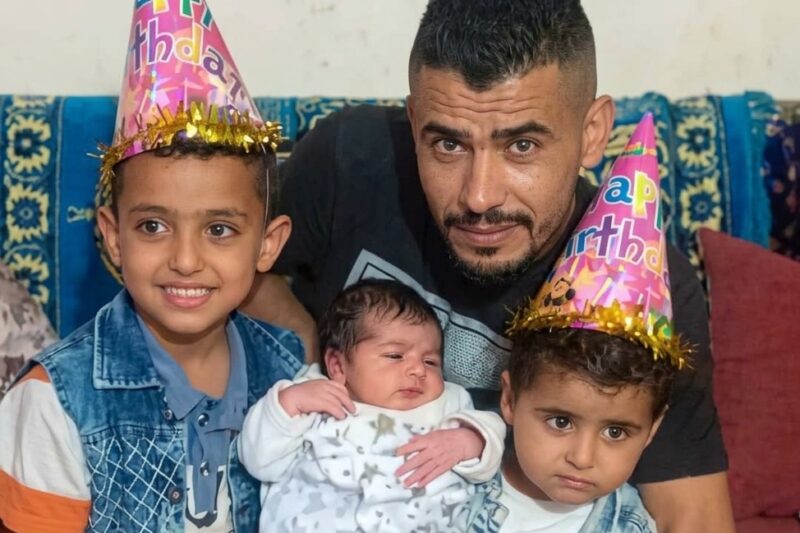
Ibrahim Hmeid, 31, who works for DHL in Belgium, is trying to secure the evacuation of his parents and his two underage siblings, a brother and a sister, from Gaza. His family members have been granted entry visas to Belgium, and a court has issued a favourable ruling on their family reunification case. Yet they remain stranded in Gaza.
« I don’t want to wait until the day I lose a member of my family. »
Hmeid says his family visited Belgium on tourist visas before the war broke out. After the war began, he hired a law firm and appeared in court more than five times to push for his family’s evacuation. In November 2023, he was informed that his family would be evacuated from Gaza. He is still waiting.
In April 2025, his family members received their visas electronically. The visas were valid for six months and could be renewed. Despite this, the evacuation never took place. According to Hmeid, the court confirmed that his family members’ names would be included on the evacuation lists.
Hmeid says his greatest fear is that he will lose one of his four family members still trapped in Gaza before he has the chance to reunite with them.
“My message is that I don’t want to wait until the day I lose a member of my family. Nothing could ever make up for losing them,” he says.
For more than three years, Soha, a Palestinian from Gaza, has been living apart from her husband, who resides in Belgium. Despite receiving official approval for family reunification in June 2026, she remains in Gaza, unable to travel to Belgium to be with him.
« I just want to be with my husband and live our lives together like any other married couple. »
The couple formally began the family reunification process in December 2025. After months of gathering documents and waiting, their application was approved. However, their hopes of reuniting have yet to become a reality, as travel and evacuation barriers continue to prevent them from being together.
Soha says the hardest part is having their application approved but still being unable to reunite. “I don’t want anything extraordinary. I just want to be with my husband and live our lives together like any other married couple,” she says.
Amid the fear and instability in Gaza, Soha worries that the wait will continue and that more years of their lives will pass while they remain apart.
She appeals to the Belgian government to help find a safe way for her to reach her husband, saying: “Our family reunification has been approved. We just want you to help us find a safe way to reunite and live together.”
For Soha, the approval represents more than a legal milestone. It is the hope of ending years of separation and building a life with her husband in safety, away from war and fear.
Hunger strike in Brussels
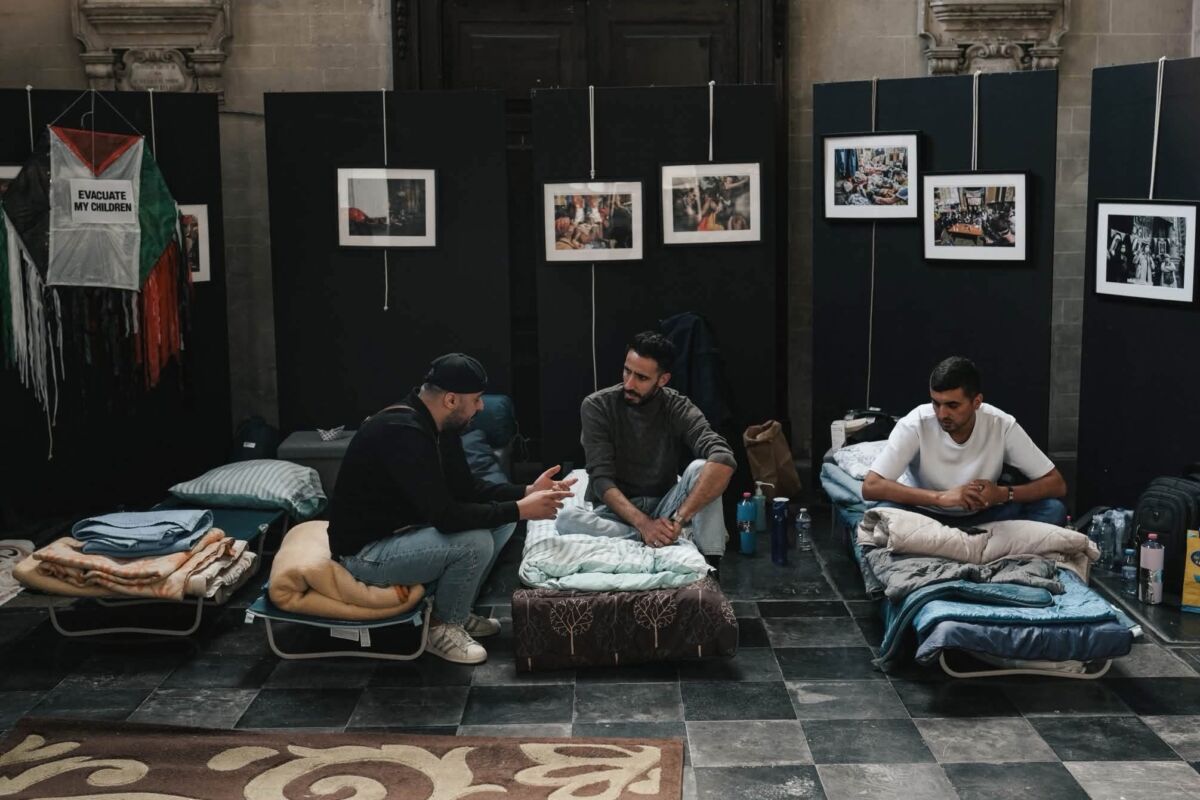
On 23 September 2026, five Palestinians living in Belgium began a hunger strike at the Béguinage Church in central Brussels, demanding the evacuation of their relatives stranded in Gaza despite having obtained Belgian family reunification visas. The hunger strike followed months of waiting, protests and appeals to the Belgian authorities. According to BRUZZ, around 1.500 Palestinians who hold entry visas for Belgium remain stranded in Gaza because border crossings are closed.
Concerns about the hunger strikers’ health grew as the strike continued. Two of them were taken to hospital after their health deteriorated. Belgium’s Minister for Asylum and Migration, Anneleen Van Bossuyt (N-VA), expressed sympathy for what she described as the “heartbreaking situation” facing the hunger strikers. However, she stressed that a hunger strike could not compel the government to make specific decisions, BRUZZ reported.
« Time means death in Gaza. »
Ahmed Al-Durra, who coordinates a Palestinian movement representing families whose relatives have received family reunification visas, said the hunger strike followed weeks of protests outside Belgium’s Foreign Affairs Ministry that had failed to bring about the desired results.
Al-Durra said doctors had advised the two hunger strikers who were hospitalised to end their strike, but both insisted on continuing despite the risks to their health. He added that the movement planned to invite government ministers, including the foreign minister, to the church to hear the hunger strikers’ demands firsthand.
Al-Durra called for urgent action to resume evacuations. “Time means death in Gaza,” he said, referring to the danger facing families still waiting to leave despite having obtained entry visas for Belgium.
Eight months without contact
For eight months, Oday Abed lived with fear and uncertainty, unsure whether his wife was still alive after losing contact with her when she was displaced from northern Gaza to the south. Now that they have re-established contact, he is on hunger strike in Brussels, hoping to secure her evacuation and reunite with her.
Abed, 32, who holds Belgian citizenship, began his hunger strike on 14 September 2026, after appeals and protests failed to secure a response to his demands. Although his wife has received family reunification approval and a Belgian entry visa, she remains stranded in Gaza, awaiting evacuation.
Abed said that moving the protest to a church in Brussels helped draw greater media attention to their situation. He stressed that their main demand is for evacuations from Gaza to resume.
His wife fears for his safety and does not want him to put himself at risk. For this reason, he has not told her directly that he is on hunger strike, particularly as she is facing serious health problems.
“We are not asking for anything extraordinary. All we want is for our families to be evacuated from the danger and death zone in Gaza,” he says.
Between Brussels and Gaza, Abed continues his hunger strike, hoping that months of waiting will finally end in a reunion with his wife, whom he once feared he had lost forever.
Students from Gaza
Belgian media outlets, including The Brussels Times, have reported on 13 students and researchers from Gaza who have received scholarships and other academic opportunities at Belgian universities and educational institutions but remain trapped in the Strip, unable to travel to Belgium.
Disagreements within the Belgian government over their evacuation have left their plans on hold. Organisations representing Belgian universities have expressed concern about the situation and called for a solution that would allow the students and researchers to resume their academic careers.
During a session of the Belgian Chamber of Representatives on 24 September, Foreign Minister Maxime Prévot (Les Engagés) said the government had yet to reach a decision on his proposal to evacuate 13 Palestinian students and researchers from Gaza. He explained that he had withdrawn the proposal from a government meeting on 11 September after some coalition partners sought to link its discussion to other migration-related issues, including returns.
He stressed that obtaining a visa alone was not enough to leave Gaza, as organising an evacuation also required a political decision. He also expressed his willingness to continue discussions within the government in the hope of reaching a constructive solution.
Losing their scholarships
The experiences of Salwa Abu Al-Hajj, 23, and Ibrahim Abu Zuhri, 33, two Palestinian students in Gaza who have been awarded scholarships, illustrate how these delays are affecting their academic futures.
In June 2026, Salwa was admitted to the Communities, Digital Media and Society programme at a university. With the help of a lawyer, she was able to submit her visa application online, but she is still waiting for an opportunity to leave Gaza. She warns that further delays could result in some students losing their scholarships. Although universities have extended their enrolment deadlines, the new deadlines are approaching and the academic semester is about to begin.
Ibrahim, meanwhile, was awarded a scholarship in May 2025 and was due to begin his studies later that year. However, because he was unable to travel, he had to request an extension of his scholarship. Despite remaining in contact with the scholarship coordinators, he still has no clear indication of when he might be able to leave Gaza. He says that studying transport engineering remotely prevents him from completing the practical coursework and laboratory training required for his degree, as suitable facilities are unavailable in Gaza. In addition to the disruption to his academic future, Ibrahim has been living in a tent for three years after his home in Rafah was destroyed.
Their experiences illustrate the difficulties facing Palestinian students who have secured academic opportunities abroad but risk losing them because they cannot leave Gaza. The consequences of the war extend beyond the disruption of their education, affecting their living conditions and future careers.
More than paperwork
Herwig Leirs, Rector of the University of Antwerp, said « the university welcomes Palestinian students and will do everything it can to keep their scholarships available, even if their arrival is delayed by several months. » He explained that the start of the academic year would not prevent the university from being flexible in facilitating their enrolment at a later date. He stressed that the decision to evacuate the students rests with the Belgian government, which has yet to reach a political agreement on the matter.
He added that the students had been selected for competitive scholarships and hoped to use the education they received to contribute to Gaza’s reconstruction. He called on the government to allow them to be included in the evacuation process.
Every visa represents a family waiting to be reunited, and behind every scholarship lies a dream waiting for a chance to come to life. Between Gaza and Belgium, these Palestinians continue to wait for the chance to reunite with their loved ones, pursue their education and build a safer future. For them, this is about more than paperwork and approvals. It is about the chance to live free from fear and a hope they have refused to abandon despite the long wait.